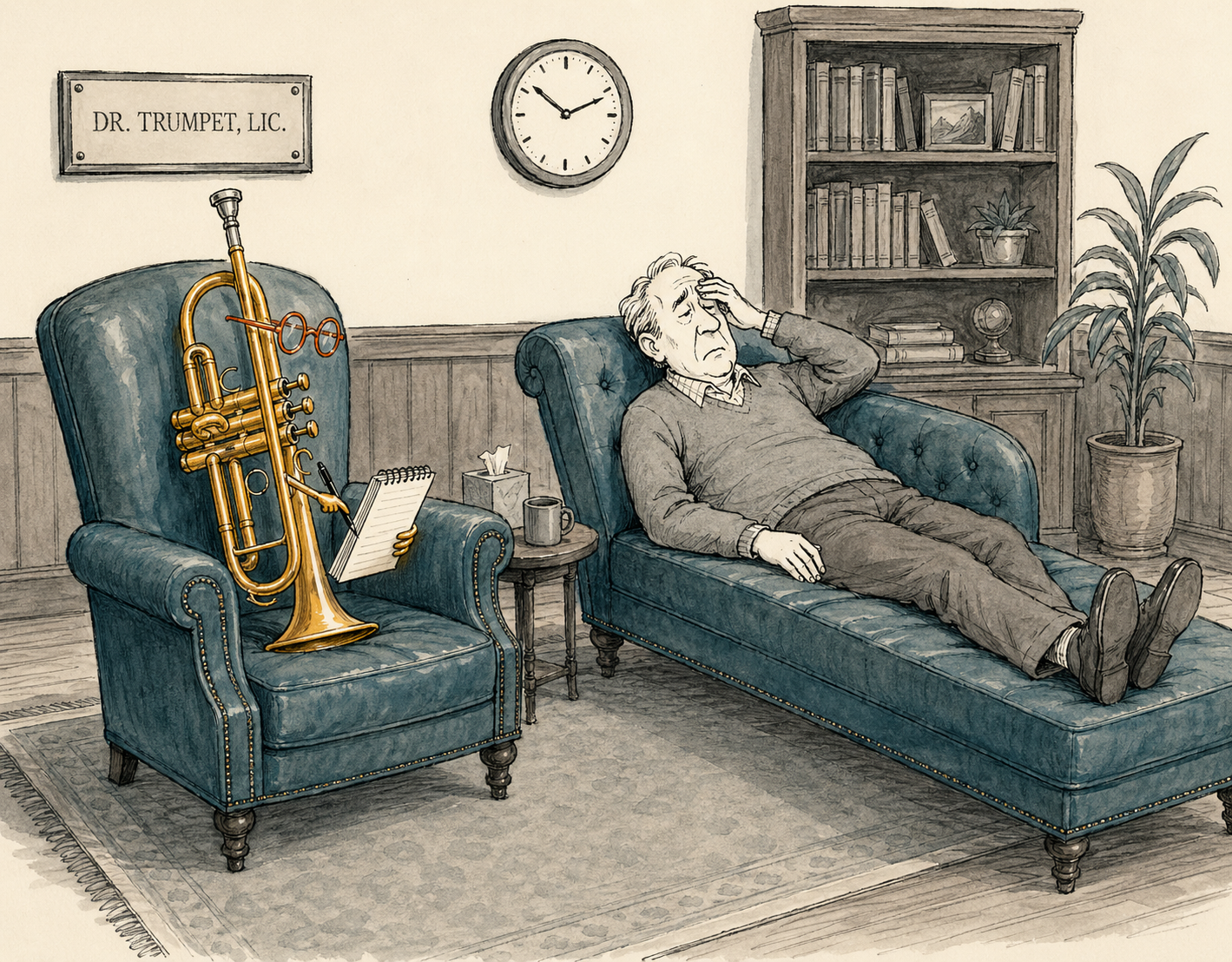
Why You Aren’t Getting Better
The title of this article isn’t an accusation. However, might I suggest that if you felt attacked by this title, this feeling is a projection on your part? If you believed you were improving as a trumpet player, then this title would evoke a different reaction in you. Perhaps you’d be curious; you’d wonder what the article was about. But you’d think, “He’s not talking about me. I wonder why THEY aren’t getting better!”
At the core of such reactions is not just our perception but a deeper, more profound element: desire. As Napoleon Hill famously wrote in “Think and Grow Rich,” “The starting point of all achievement is DESIRE. Keep this constantly in mind. Weak desire brings weak results, just as a small fire makes a small amount of heat.” This intense desire for growth and improvement can drive our actions, regardless of how we perceive our current state. It’s what can propel us beyond self-imposed limitations or doubts, prompting us to take concrete steps toward betterment.
Why do I highlight these two potential reactions to this title? I assure you it’s not a pedantic game of semantics, even though semantics concerns meaning, which is far from trivial. I emphasize these reactions to discuss perception and its role in our improvement as trumpet players. But intertwined with perception is the fire of desire that often pushes us forward or holds us back.

If your perception is “I’m not getting better,” your reaction to the title differs from that of a trumpet player who thinks, “I am getting better.”
Within those two possible perceptions about the title, there’s a myriad of actions one could consider. Perhaps the reader who feels they’re not getting better — and thus feels that guilty sting in their heart upon reading the title — decides to hungrily dive into the content. They’re hopeful, looking for that juicy nugget of wisdom to aid them in their trumpet quest for mastery. But then again, maybe not. That same guilt-ridden reader might wallow so much in that guilt that they can’t face the reality of their trumpet skills.
Now, consider the trumpet player who thinks, “I am getting better.” They read the title and confidently tell themselves, “He can’t be talking about me! He’s talking about THEM.” This trumpet player, too, has a couple of roads they might go down. They could get curious, read the article, and see what pitfalls others are falling into — keeping the door ajar to the idea that maybe they’re making some of those mistakes too. Or they might just wave off the article altogether, thinking, “How could it be relevant? After all, I am getting better.”
Can you spot the pattern? Regardless of your personal perception, or the feelings that arise, what truly counts is how you leverage those perceptions and feelings into subsequent action. In the examples provided, we observed one trumpet player who recognizes their shortcomings and is driven to take positive action. Conversely, another player feels confident in their progress but remains motivated to engage with the content, ready to learn.
The key is not merely having a feeling, but how you respond to and act upon that feeling. This action-driven approach is the ultimate key to becoming a better trumpet player. While feelings are important — they can inform, inspire, and even ignite our passion — it’s the steps we take in response to those feelings that truly push us toward progress.
Consider the journey of Arturo Sandoval. Growing up in Communist Cuba under Fidel Castro’s dictatorship, he faced incredibly challenging conditions. Despite the oppressive regime, which resulted in poverty, food shortages, and curtailed freedoms, and even without having a trumpet — just a mouthpiece — he was driven by a burning desire to master the trumpet. His feelings of passion and determination fueled the massive action he took against all odds.
It’s hard to fathom the array of emotions and perceptions young Arturo might have experienced during those times. Yet, through it all, one unwavering desire drove him: his passion to excel at the trumpet. This meant that the hostile environment, the suppressive government, the absence of an actual trumpet, potential political persecution, and poverty were not insurmountable obstacles for him. Each challenge was met and overcome due to his definitive desire and the relentless actions he took in pursuit of his goal. Arturo didn’t allow doubt to deter him or fall into the trap of making excuses. Instead, he consistently overcame each obstacle with determined and purposeful action.
Now, it can be tempting to think that Arturo is an outlier. After all, the maestro himself is a freak of nature, right? A prodigy of prodigies? While, yes, Arturo is exceptionally gifted in his natural talents, this natural talent was fused with relentless action and discipline to create a world-class trumpet player worthy of modeling and emulation. Even though you or I might not be gifted with the same innate musical genius it doesn’t mean we can’t benefit from the proven formula that the Arturo story helps to outline.
If you’re skeptical, let me share another example. Clark is a remarkable individual I know who harbors a profound love and passion for music. At the age of 93, he rekindled his relationship with the trumpet. What struck me most was the intense desire, persistence, and sense of purpose that ignited within him as his actions aligned with his objective: mastering the trumpet. Observing his journey has been deeply inspiring. By my estimation, it’s not just his trumpet skills that have soared; his overall demeanor and health have visibly improved as well. The transformative power of action, driven by a firm desire, is undeniable. Examples abound, provided you know where to look.
I understand — you don’t know Clark personally. His accomplishments at 93 in just three months (flawlessly producing high C’s, eliminating the embouchure “sputters” that once marred his sound) might not resonate with you deeply. But then, consider your own journey. What drove your swift progress when you began this program if not a resolute desire to excel? Think of Mary’s remarkable increase in range within just weeks, or Bruce’s newfound ease of play that allowed him to “fill the room” once more. Consider Jeremy’s enhanced response, which aided him in the completion of his degree to deliver an outstanding recital performance. Recall Terry mastering the pedal range, internalizing his scales, and harnessing newfound abdominal control to further boost his already impressive stamina. And then there’s Greg, facing the challenges of starting over, yet finding solace in the process and improving steadily, albeit incrementally. These are your narratives. The formula is simple but powerful: Desire + Action = Results. Factor in principles like the 1% improvement and the 80/20 rule, and you’re poised to be unstoppable.
Understanding the theory behind the synergy of desire and action is essential. However, mere understanding isn’t enough. It’s time to translate this theory into actionable steps and forge ahead.
Concrete Steps to Harness Desire and Translate It into Action:
1. Self-Reflection: Spend a quiet moment each day pondering your goals. What do you truly desire? Visualization can be a potent tool here; imagine yourself achieving that goal. A notebook is even more powerful. To write well, is to think well.
2. Set Specific Goals: Broad ambitions can be overwhelming. Break down your ultimate goal into smaller, achievable steps. All your scales is scary! C# minor today, is not!
3. Daily Practice: Even on days when motivation is low, commit to practicing. It doesn’t always have to be a long session. Consistency is the key.
4. Seek Feedback: Regularly play for someone you trust, be it a teacher, a peer, or even a family member. They can offer invaluable feedback and encouragement. Come to the coaching calls!
5. Stay Curious: Continuously educate yourself. Read books, go through the program materials, podcasts, interviews, etc. Never stop learning.
6. Celebrate Small Wins: Each time you reach one of your minor goals, pause to acknowledge and celebrate it. Discrediting a minor achievement is like sabotaging your own internal reward system, making even the most passionate efforts feel like an uphill battle.
Reflect and Engage:
Now, dear reader, take a moment to reflect. What are your desires when it comes to your trumpet playing? Are your daily actions aligning with those desires?
Perhaps you’ve felt the sting of stagnation or the frustration of slow progress. Now ask yourself, are you truly taking the necessary steps, consistently, to move closer to your goal? Did you make your 1% improvement today? Yesterday? Last week? Last month?
Remember, Arturo and Clark, with their vastly different backgrounds, both shared a relentless drive to act in alignment with their desires. Where do you see yourself in their stories? And more importantly, what will you do about it starting today?
Note: If your name isn’t mentioned in this article, it doesn’t reflect a lack of progress on your part. This was written on September 13th, 2023. Your exclusion might be because you joined the program after this date, haven’t been with us for a significant duration, or haven’t attended many coaching calls.
Recommended Reading: For those looking to delve deeper into the concept of desire and its role in achievement, I highly recommend reading “Think and Grow Rich” by Napoleon Hill. While not a trumpet book per se, its principles about success and mindset can be readily applied to the trumpet player’s journey toward mastery.
Want this kind of thinking applied to your own playing?
The free 30-minute training reveals the same framework I use with my 1% Trumpet Program students — the one most comeback players never figure out on their own.
Watch the free training →Want the full system in 30 minutes? Watch the free training — the same diagnosis-first framework I use with every player in the 1% Trumpet Program.