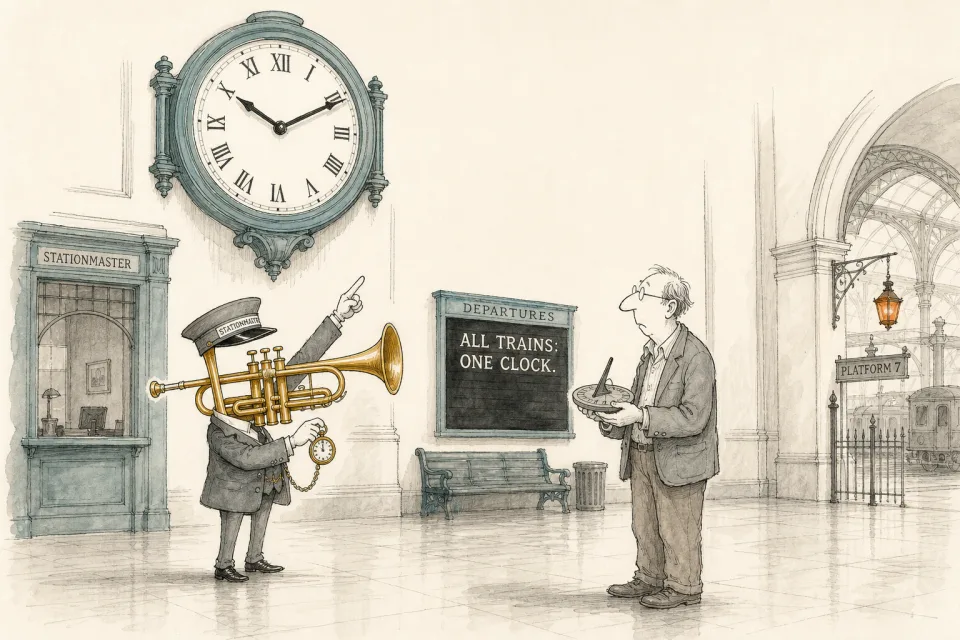
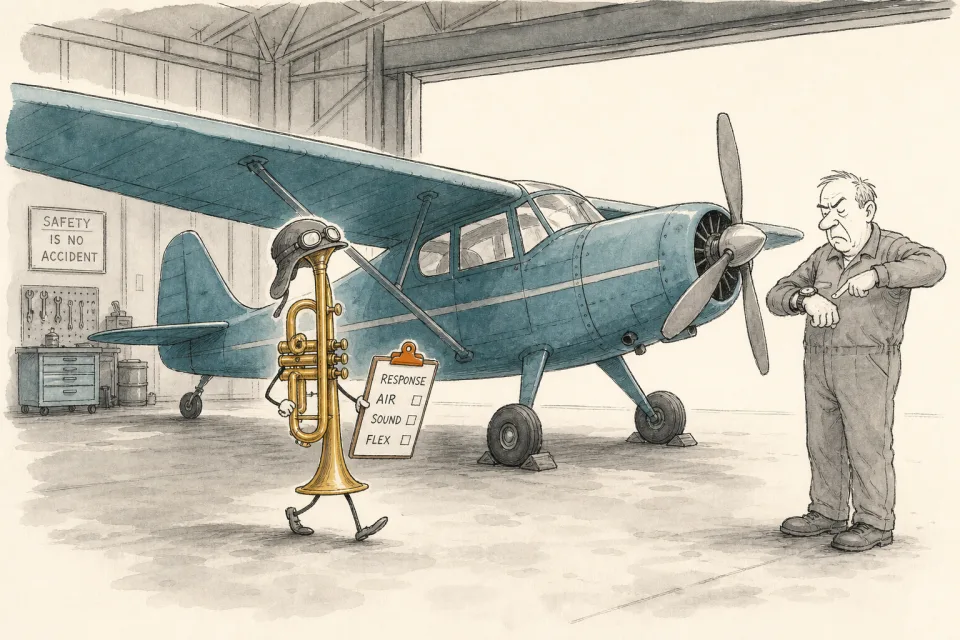
No pilot has ever skipped the preflight walk-around because the plane flew fine yesterday.
That’s the entire philosophy of a good trumpet warm-up, and it’s worth sitting with, because most players have the purpose of warming up completely backwards. They treat it as a ritual to appease the trumpet gods, a fixed sequence of hallowed exercises that must be completed before “real practice” is allowed to begin. Played on autopilot, checked off, forgotten. Ritual warm-ups waste ten minutes a day, which is an hour a week, which is more than fifty hours a year of horn time spent appeasing nobody.
A warm-up is not a ritual. It’s an inspection. The pilot isn’t walking around the plane to make the plane feel respected; she’s checking what condition today’s aircraft is actually in, because she’s about to fly it, and yesterday’s inspection covers yesterday. Your body is a slightly different instrument every morning: sleep, stress, hydration, yesterday’s heavy session, that third coffee. The warm-up is how you find out who showed up, and it feeds directly into the session structure that follows it.
Prefer to watch? Here is the short version.
What the Inspection Covers
Whatever exercises you use, the first minutes on the horn should answer a short checklist, the same way a walk-around covers control surfaces, tires, and fuel.
Response: do notes speak on time, at soft dynamics, without a running start? Response is the single most honest gauge on the panel, which is why it leads the checklist. Air: is the breath moving freely or is something guarding? Sound: is the core of the tone present, or fuzzy at the edges? Flexibility: do slurs between partials move smoothly or catch? Comfort: any spot on the face that feels yesterday’s session more than it should?
Each check is scored against the North Star I use for everything: feels good, sounds good, responds easily. All three, on easy material, before you ask for anything ambitious. Ten minutes of this tells you precisely what kind of day you’re holding, and that information is the warm-up’s actual product. The notes are almost incidental.
The Two Schools: Static and Dynamic
There are two legitimate ways to run the inspection, and knowing which one you need is most of the art.
A static warm-up is the same short sequence every day, same order, same tempos. Its power is the baseline: when the input never changes, any change in the output is information about you. Tuesday’s sluggish response isn’t a mood, it’s a measurement, because Monday’s response on the identical exercise was crisp. Static warm-ups also cost zero decisions, which matters at 6:30 a.m. The tradeoff is time and relevance; the fixed sequence checks everything, including systems that didn’t need checking today.
A dynamic warm-up skips the script. You sense what needs attention and go straight there: the slurs felt sticky yesterday, so today opens with flexibility; the soft attacks wandered, so today opens with response work. It’s faster and better targeted, and it builds the diagnostic ear that separates mature players. The tradeoff is that it requires that ear already; a player without deep self-awareness running a “dynamic” warm-up is really just playing whatever they feel like and calling it assessment.
My recommendation is unglamorous: earn dynamic through static. Run a fixed inspection until you know your own baselines cold, however many months that takes. Comeback players and anyone rebuilding after a layoff should default static; if that’s you, the full context lives in how to practice trumpet after a long break. When you can predict the inspection’s findings before you play it, you’ve outgrown the script and dynamic mode is yours.
A Static Sequence That Earns Its Minutes
If you want a concrete starting point, here’s a ten-minute inspection that covers the checklist. Breathe first, away from the horn, thirty seconds of full, unforced breaths to establish what free air feels like. Then soft long tones in the middle register, starting on a note you could play in your sleep, listening for instant response at low dynamics; a few minutes here checks response, air, and sound at once, and long tones are a deeper subject than they look. Then easy slurs between partials in comfortable range, checking flexibility without strain. Then a handful of light articulated notes, single tongue, moderate tempo, checking that attacks are clean and centered. Close the inspection with one easy musical phrase played beautifully, because the last item on any checklist should be “confirm the whole aircraft flies.”
Ten minutes, maybe eight once it’s familiar. Nothing in it is heroic, which is the point. The warm-up’s job is measurement, and you don’t measure with a sledgehammer.
Reading the Inspection Report
Here’s where the warm-up pays for itself: the findings change the flight plan.
Everything checks out? Fly the plan. Today can carry its scheduled intensity, including heavy work if that’s where your week puts you. Response is late and the face feels thick? That’s fatigue on the gauges, and the smart call is downgrading today to light work, staying in comfortable territory, exactly as the Light, Medium, Heavy system prescribes. Something specific caught, say the slurs, while everything else passed? You may have just found the session’s focus topic, or at least tomorrow’s.
What you never do is override a failed inspection because the calendar says heavy day. Pilots who fly anyway make the news. Players who play anyway make compensations, and grinding on chops that failed the morning inspection is how a tired day becomes a lost week, which is the whole subject of should you practice when your chops are tired.
The Skip-It Crowd
Now, the objection, because I know it’s sitting there: “warm-ups are wasted time, I only get thirty minutes as it is, and I’d rather spend them on real practice.”
I’d push back on the accounting. The ten-minute inspection isn’t subtracted from real practice; it’s what makes the other twenty minutes real. Without it you’re guessing at your condition, and the two guesses both lose: guess strong on a weak day and you grind compensations into muscle memory; guess weak on a strong day and you waste your best chops on material beneath them. The warm-up is ten minutes spent making twenty minutes count, and on genuinely short days it compresses: five minutes, long tones and slurs only, checklist abbreviated but never skipped. The walk-around gets faster with experience. It doesn’t get optional.
The Gauge Most Players Never Learn to Read
The uncomfortable part of everything above is that an inspection is only as good as the inspector. Two players can play identical warm-ups and one of them extracts a full diagnostic while the other extracts a vague feeling that things are “fine, mostly.” Learning what late response actually signifies, which catches matter and which are noise, what your gauges look like the day before a great week versus the day before an overuse problem: that reading skill is the real warm-up curriculum, and it’s genuinely hard to build alone, because nobody ever taught you what normal is supposed to look like.
Teaching adults to read their own gauges is a big part of what I do in my free 30-minute training, alongside the practice system the warm-up feeds into. It’s the same approach the players in the 1% Trumpet Program use every morning, and it turns the first ten minutes of your day from ritual into instrument panel. Watch the free 30-minute training here.
Walk around the aircraft. Read the gauges. Then fly.
— Jesse