So you’ve decided you need an embouchure reset. Maybe a teacher told you. Maybe you read it on a trumpet forum at two in the morning. Maybe you just looked in the mirror and thought, “Everything about my face is wrong.”
Here’s what I need you to hear before you do anything drastic: you probably don’t need what you think you need. The embouchure reset, the way trumpet players usually mean it, is the nuclear option — and rushing into it can make things significantly worse.
I’ve worked with hundreds of players who came to me convinced their embouchure was broken and they needed to start over. Almost every time, the real problem was something they never would have guessed. So let’s define the thing properly before you blow anything up.
What Most People Mean by “Embouchure Reset”
When most players say reset, they’re picturing a full teardown. Move the mouthpiece. Change the lip formation. Rewire how you produce sound from scratch. Become a beginner again.
I get why that’s appealing. If your range is gone, your endurance is shot, and your sound is thin, it feels like something is fundamentally broken. And if something’s fundamentally broken, you need a fundamental fix. Right?
There’s a fantasy hiding inside the teardown, too. The fresh start. The clean slate. If I just rebuild from zero, I’ll finally do it right this time. It’s the same reason people burn their whole diet down on January 1st instead of fixing breakfast. Dramatic feels like decisive.
But dramatic isn’t decisive on this instrument. Not necessarily, and usually not at all.
The Handwriting Test
Say your handwriting has gotten terrible over the years. Sloppy, cramped, hard to read. You grip the pen too hard. Your wrist is tense.
Would you switch to writing with your left hand? Would you say, “Forget twenty years of motor patterns, I’m starting fresh with the other one”?
No. That’s insane. You’d keep your right hand and clean up the technique. Loosen the grip. Relax the wrist. Work on form.
But that’s exactly what a full teardown asks of you. You’re throwing away everything your body has learned — the good along with the bad — and starting from zero. Decades of motor patterns, gone. And most of those patterns were fine. The problem was never all of it. It was one or two habits hiding inside a system that mostly works.
That’s not a reset. That’s an amputation.
What an Embouchure Reset on Trumpet Actually Means
Here’s my definition, and it’s different from what you’ll find online.
A real embouchure reset is getting your face to stop treating the trumpet as a threat.
That’s it.
When you’ve spent months or years forcing, pressing, and grinding through practice sessions, your body develops protective reflexes. Every forced session makes a small deposit in the tension account. Your lips learn to brace before the mouthpiece even touches your face. Your jaw locks. You clamp down with pressure because your body has learned that playing means pain, and pressure is the only survival strategy it knows.
You can spot a face in defense mode if you know what to look for. The first note of the day is a fight instead of a formality. You feel your chops tighten just thinking about the high register. Easy passages feel like work. Rest doesn’t refresh you the way it should, because the tension never fully lets go between sessions.
All the big symptoms — dead range, shot endurance, thin sound, inconsistent response — usually aren’t problems with your embouchure setup at all. They’re symptoms of that permanent defense mode.
And an embouchure under siege can’t adapt. It’s like trying to heal a cut on your hand while punching a wall every day. The wound never closes. Not because the wound is unusual. Because you won’t stop punching the wall.
The complete embouchure guide walks through how the whole system is supposed to work when nothing is defending itself. That’s the target. Not a new face. Your face, off high alert.
Why the Nuclear Option Backfires
I had a student — a retired band director, decades of experience — who was told by another teacher to completely reposition his mouthpiece. Move it to the left, change the angle, the works.
So he did it. All at once.
Six months later, he could barely play a G above the staff. Lost his sound. Lost his confidence. Had no idea where his embouchure was supposed to be. And he couldn’t go back, because he’d moved so far from where he started that “back” didn’t exist anymore.
He came to me convinced the reset had failed him. The truth was harsher: nobody had ever diagnosed what was actually wrong in the first place.
That’s the core problem with massive changes: when you move everything at once, you have no idea what helped and what hurt. It’s changing your diet, your sleep, your exercise, and your medication on the same day, then trying to figure out which one moved your blood pressure. You can’t isolate the variable.
Even when the end goal genuinely is a significant change, you get there in small increments. Test each one. Know how to reverse it. Always leave yourself a path home.
When You Actually Do Need to Change Something
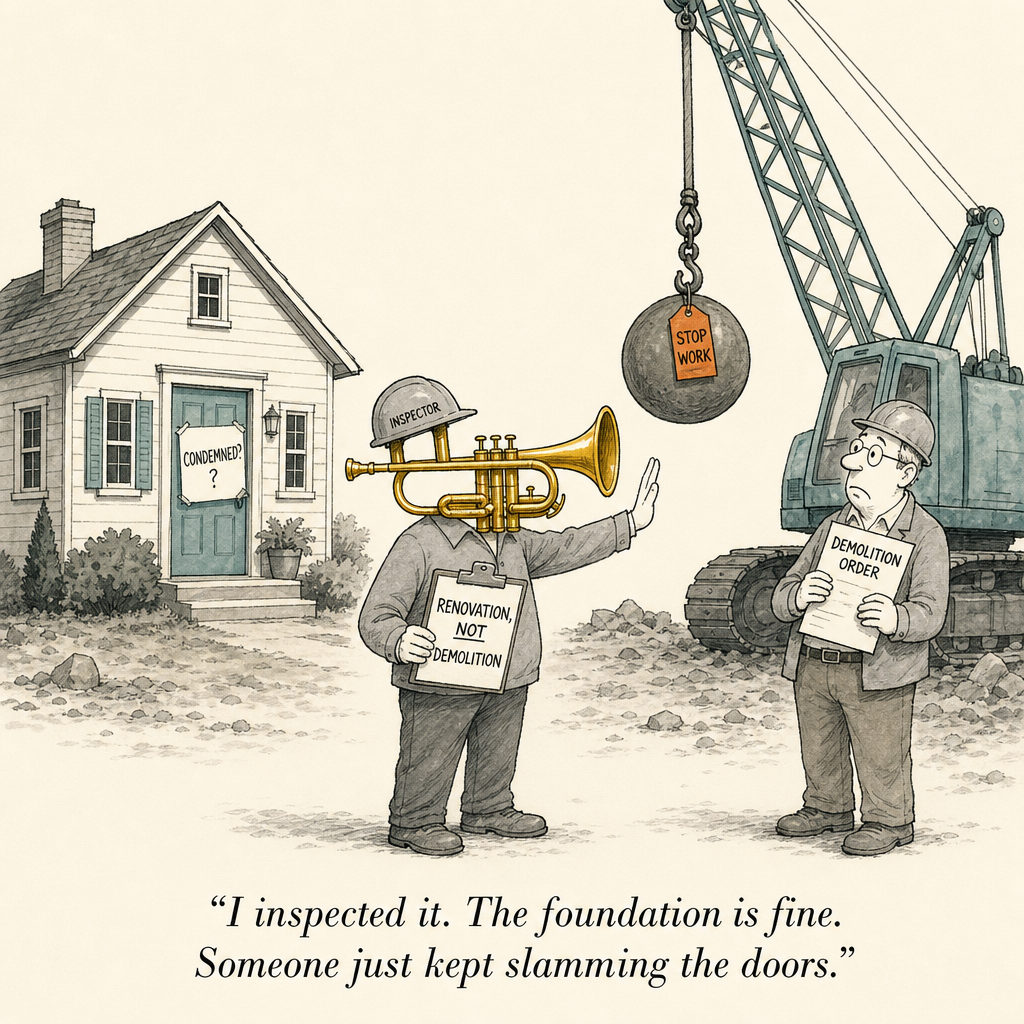
Am I saying nobody ever needs a mechanical change? No. Sometimes a placement really is doing damage. Sometimes a habit really is a dead end and something in the setup has to move.
But here’s the distinction that saves careers: even a legitimate change is not a teardown. You change the one thing that’s provably wrong, in the smallest increment that could work, while everything else stays put. You keep the twenty years of motor learning that still serves you. The band director didn’t fail because he changed something. He failed because he changed everything, all at once, with no way to measure and no way back.
And you don’t get to skip the first part either. A face in defense mode will sabotage any mechanical change you make, no matter how correct it is on paper. Free the embouchure first. Then, if something still needs to move, move it like a surgeon — not like a demolition crew.
What a Real Reset Looks Like
Five steps. None of them are dramatic, which is exactly why they work.
1. Stop beating up your chops. If every session leaves you swollen and exhausted, your embouchure never gets a chance to adapt. Your lips can’t learn anything new while they’re busy surviving. Shorter sessions. More rest inside the session — rest as long as you play, at minimum, while you’re in reset mode. If you normally grind through an hour, make it two twenty-minute sessions with real recovery between them. Stop before you’re destroyed, not after.
2. Lower the stakes. Play in ranges and dynamics where it’s easy. If your comfortable ceiling is a C on the staff right now, stop hammering at high C — every one of those attempts is a rehearsal of the exact tension you’re trying to escape. Easy playing isn’t wasted time. It’s the only condition under which a defensive embouchure will lower its guard. Let your face remember what it feels like to produce sound without a death grip.
3. Change one variable at a time. If you do need a mechanical adjustment — less pressure, a slight placement shift, a freer jaw — change one thing and test it for days before touching anything else. You don’t retune all six strings at random and hope. The full method for making changes without losing yourself is in how to practice embouchure changes.
4. Give it time. Your embouchure is living tissue. Adjust something Monday and you might not see the result until Thursday. Don’t panic, and don’t stack a second change on top of an unfinished experiment. Set the variable. Test. Evaluate.
5. Track the data. Record yourself. Note your comfortable range ceiling, when fatigue arrives, and how long recovery takes. Two lines in a notebook after each session is enough. Don’t rely on how it feels — feelings lie, especially mid-frustration, and a bad afternoon can convince you a working experiment failed. Data doesn’t have moods.
Notice what’s missing from that list: a new mouthpiece placement, a new lip formation, a new anything. Most players who follow those five steps discover the “broken” embouchure starts working again on its own, because the reflexes guarding it finally stand down.
How Do You Know It’s Even an Embouchure Problem?
Here’s the part nobody wants to hear: most of the time, you can’t diagnose this yourself.
The gap between what you think your embouchure is doing and what it’s actually doing is enormous. I’ve had students arrive certain they needed a complete rebuild, and the real issue was excessive pressure. Or tongue position. Or an air support problem wearing an embouchure costume. Those impostors produce identical symptoms — vanishing range, early fatigue, thin sound — which is exactly why self-diagnosis keeps sending players to the wrong operating room.
If your playing collapsed recently and you’re hunting for the cause, start with what to do when your embouchure stops working — the diagnostic order matters more than the surgery.
If you’ve been struggling for months and nothing has worked, get a qualified set of eyes on your playing before you decide to blow it all up. The embouchure might not even be the problem. And even when it is, the fix is almost always smaller than you think.
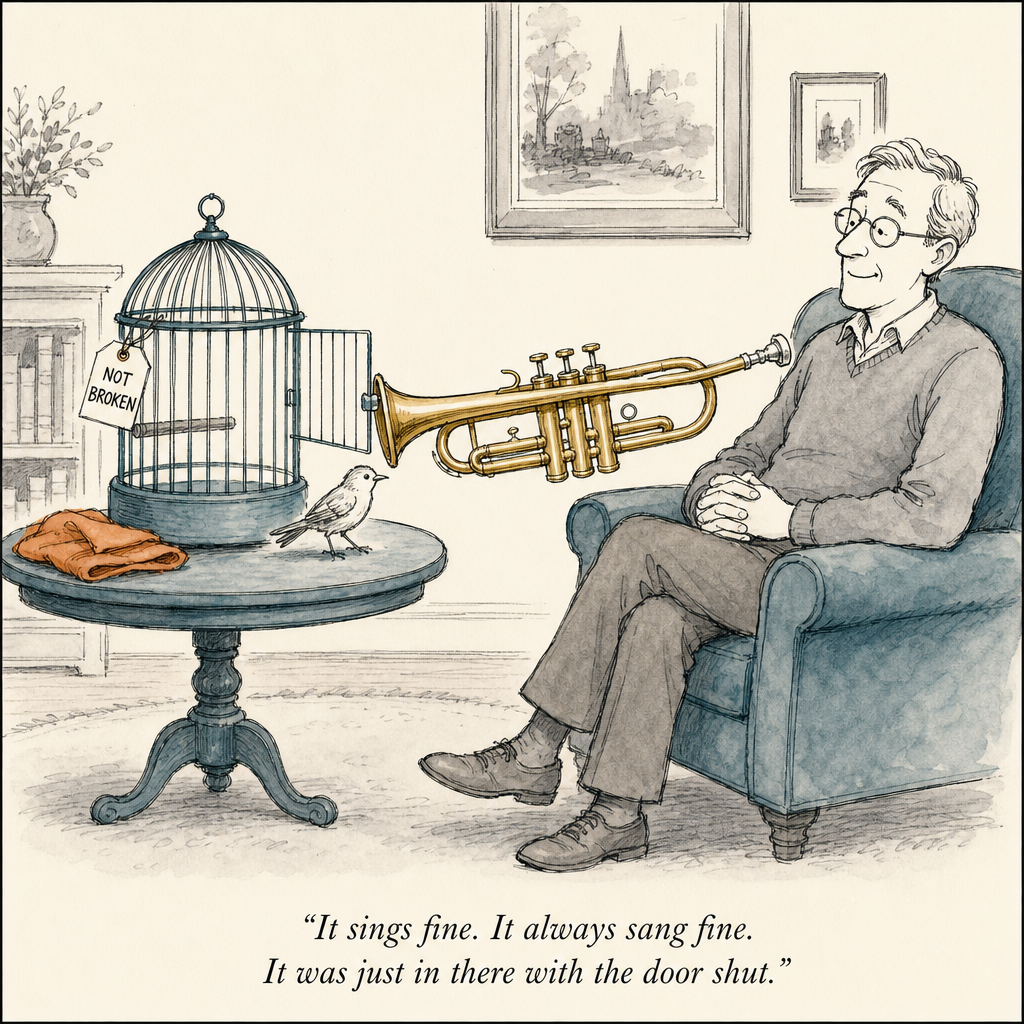
Your embouchure isn’t broken. It’s trapped. Trapped in tension patterns, compensations, and protective reflexes built up over years of forcing. A trapped embouchure doesn’t need to be replaced.
It needs to be freed.
Free It, Don’t Replace It
If you’re sitting there wondering whether you need a reset or just a smarter approach, the answer starts with understanding the protective reflexes holding your playing hostage — and how to make your face feel safe enough to let go of them. That’s exactly what my free training covers: thirty minutes on why forced playing locks you up and the step-by-step way out, no teardown required. Watch the free 30-minute training before you touch your setup. Your future chops will thank you.
— Jesse