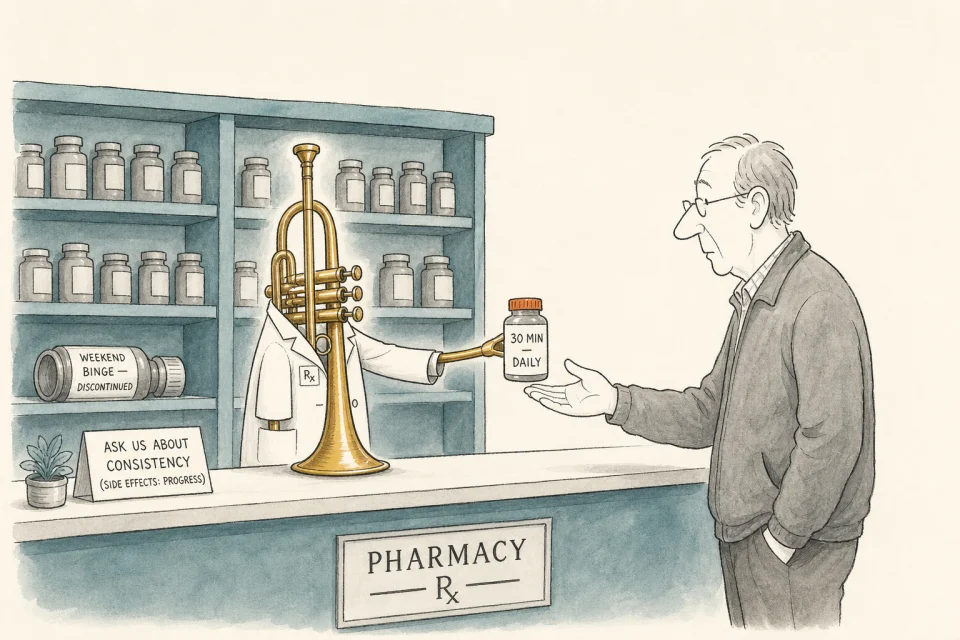
Use thirty minutes as a practical planning target, not a test you must pass at the expense of your chops. Build a focused session with recovery between repetitions. A shorter useful session still counts; a comeback player rebuilding capacity should not force thirty minutes just to satisfy the clock.
Choose today’s session | Thirty-minute example | Busy days | Daily workload | Questions
The point is regular, well-aimed practice that leaves you able to come back and do it again. My complete trumpet practice guide explains the wider system. This page helps you decide how much of it fits today.
How long should you practise today?
- Established player with comfortable response: plan a focused thirty-minute session, including rests, and adjust to the work you actually need.
- Returning after a long break: begin with an amount you can repeat comfortably. Build duration, difficulty and intensity gradually rather than raising all three together. See practising after a break.
- Genuinely squeezed day: choose one small job and use the time you have. Fifteen focused minutes is not worthless because it is less than thirty.
- Unusually tired, painful or persistently uncomfortable: do not protect a playing streak by pushing through symptoms. Stop playing when needed; get qualified advice for pain or persistent symptoms.
- Rehearsal or performance day: count that playing toward your workload. Do not add a full hard workout as though the rehearsal never happened.
Elapsed time is not the same as playing time. A thirty-minute practice block can include horn-down recovery, listening, checking a phrase and writing a brief note. It does not mean thirty continuous minutes with the mouthpiece on your face.
Practice Is a Dose, Not a Duration
A useful practice dose combines the task, the difficulty, the time and your ability to recover. More minutes do not automatically mean more progress. If the sound gets thinner, response gets less reliable or pressure starts doing the work, the plan needs to change.
The dose comparison is a coaching analogy, not a medical prescription. Thirty minutes is a useful planning container, not a universal biological minimum below which no learning happens. Forty-five minutes is not an expiration timer that applies to every adult embouchure. Your current quality can tell you to stop much earlier.
What a thirty-minute session can look like
This is an example of how to organize elapsed time, not a compulsory routine or a prescription for a returning or injured player. Recovery belongs inside each playing block.
- Minutes 0-5: entry check and gentle warm-up. Notice today’s response, sound and ease before deciding how hard to work. Use familiar comfortable material rather than testing your ceiling.
- Minutes 5-17: one focused skill. Pick a real job, such as connecting an easy lip-slur pattern cleanly or fixing a short phrase. Alternate attempts with horn-down recovery. Keep the task small enough to make good repetitions.
- Minutes 17-27: musical application. Put that skill into a comfortable melody or passage. Keep the sound and phrasing as important as hitting the notes.
- Minutes 27-30: close and log. Finish comfortably if playing still feels good, then write what improved and what the next session should address. If quality has already dropped, use this time off the horn.
The blocks add up to thirty minutes. They are adjustable. You do not owe the clock an extra set when the useful work is finished. For a deeper session blueprint, read how to structure a trumpet practice session.
Keep the 2:1 practice rule straight: two correct repetitions for each mistake. It is not a two-to-one playing/rest time ratio. If you cannot recover correct repetitions, simplify the task instead of collecting more misses.
“I Don’t Have Thirty Minutes”
Protect a regular appointment with the trumpet where you can. A practice time that is merely hoped for is easy to lose. Leave the horn safely accessible, pick the job before you start, and remove a distraction rather than spending your whole window choosing what to play.
But a genuinely short window is not a reason to throw the day away. Fifteen minutes with coffee and fifteen after dinner can make a useful split day, if your capacity supports it. On a smaller day, choose one manageable phrase or coordination job, include recovery and stop while the repetitions are still useful.
Keeping the habit and completing a full development session are different jobs. One minute can keep the appointment alive; it is not a promise that one minute gives you the same training as a focused session. Return to the normal plan when time and capacity allow. Do not compensate for missed minutes with a punishment workout.
Why Regular Beats the Weekend Binge
Frequent manageable sessions give you repeated chances to make a correction and return to it. A three-hour Saturday is not automatically an upgrade over a consistent week. If the marathon leaves you unable to practise comfortably afterward, it has borrowed from the next sessions.
Miss a day and come back to the next useful session. Rest is not a moral failure. Consistency means maintaining a sustainable practice system, not playing through pain to keep a perfect calendar.
Can you practise more than forty-five minutes a day?
Yes. Total time depends on your current capacity, the material, rehearsal demands and recovery. Longer days can use separated sessions with genuine breaks. They should not be built by endlessly stacking harder work.
Use Light, Medium, Heavy training to vary workload across the week. The clock does not overrule the body: a planned hour can become a shorter session when response and ease deteriorate. See rest days for trumpet for the recovery side.
After time away or injury, build back gradually. BAPAM’s return-to-playing guidance explains why duration, intensity and difficulty all matter. It is guidance for musicians, not a one-size-fits-all trumpet routine.
One line that makes practice easier to judge
Write: date | one goal | elapsed time | approximate playing and rest | response, sound and ease | next-session choice.
For example: “Tuesday | connect the easy phrase | 20 minutes with breaks | smoother at the same soft volume | repeat before adding speed.” Look for repeatable improvement under comparable conditions, not a guaranteed upper-register result after ninety days.
Daily practice questions
Is fifteen minutes enough to be useful?
Yes, when the task fits the time and your current capacity. It may not cover every part of your usual session, but useful focused work is not erased by being short.
Can I split my practice?
Yes. Separate sessions can help you fit practice into the day and recover between blocks. Each session still needs a clear job; splitting does not make unlimited total workload safe.
Do rehearsals count?
They count toward playing load, even when they do not address the specific skill you meant to practise. Adjust the extra work accordingly.
Must I play every day?
A regular routine is valuable, but a rest day or symptom-driven stop is not failure. Listening, score study and planning can maintain musical contact without adding playing load.
How do I know I have done too much?
Watch for declining response, thinning sound, extra pressure and quality you cannot recover with a break or easier task. Stop for pain or persistent symptoms and seek qualified help rather than diagnosing yourself from a timer.
Aim the minutes at the right problem
A perfectly consistent schedule can still polish the wrong thing. Pick one observable bottleneck, use a task that addresses it, and check whether the correction carries into your music. Quality versus quantity is the next useful read if your minutes are growing but your playing is not.
For the wider approach to finding the bottleneck and organizing your practice, watch the free training. This is the same practice approach I teach through 1% Trumpet coaching.
Regular practice. Useful repetitions. Enough recovery to come back tomorrow.
Jesse