If you can whistle from low to high, you can play high notes on the trumpet. I guarantee it.
That’s not a motivational poster. It’s a mechanical claim, and it’s the key to understanding tongue position for high notes on trumpet, the most invisible and most underused lever in the upper register. The mechanism that lifts a whistle from low to high is the same mechanism that lifts your playing from the staff to above it. It’s already installed in your body. Most players just never wake it up on the horn.
I’ve written before about tongue position as an embouchure lever, the general mechanics of how the tongue shapes the air. This article is the high-register application: what the tongue specifically does above the staff, why it matters more up there than anywhere else, and how to train it without tying your face in knots. It’s one piece of the complete guide to building trumpet range, and for a lot of players it’s the missing piece.
Tongue position for high notes: the actual mechanism
Here’s the chain of events behind every note you play. Air crosses the opening between your lips, your lips vibrate, the horn turns that vibration into sound. Higher notes require faster vibration. Faster vibration requires faster air arriving at the lips.
The tongue is one of the most important ways to speed up that air.
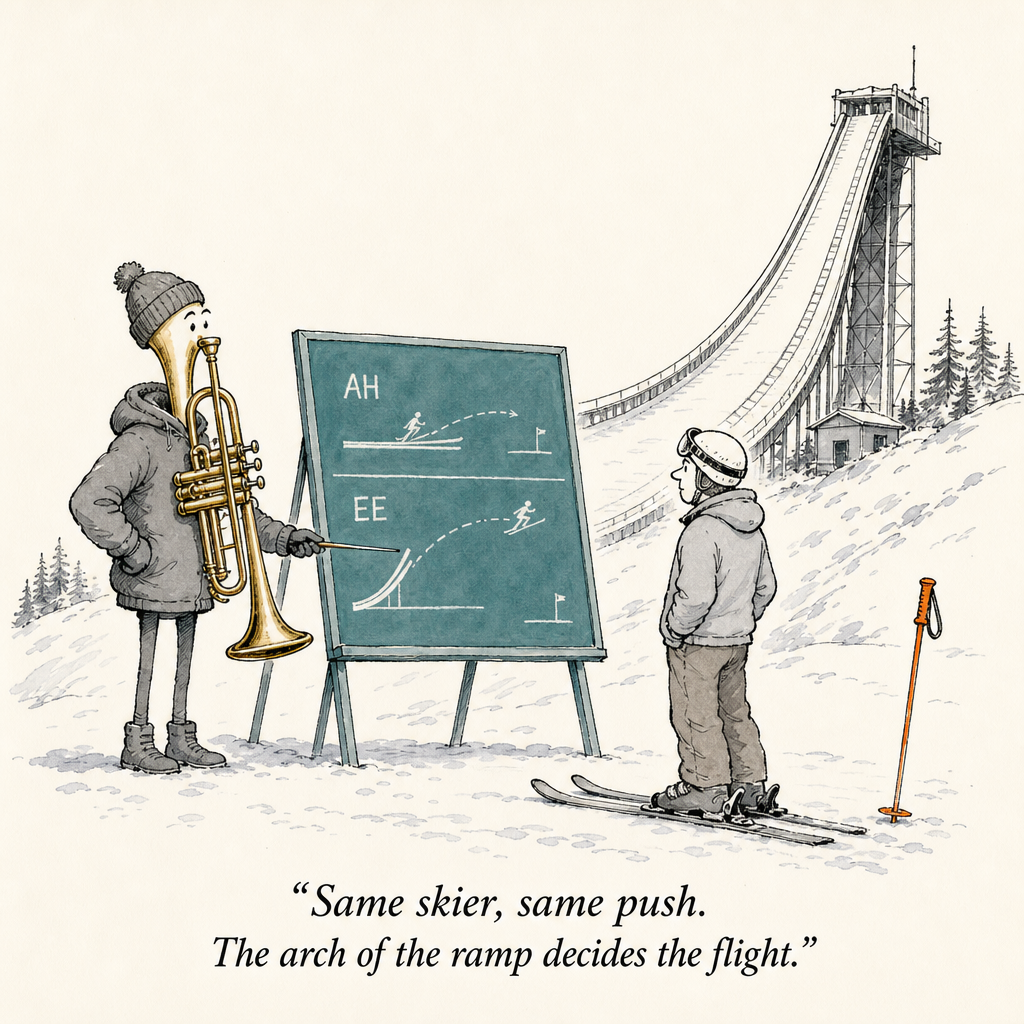
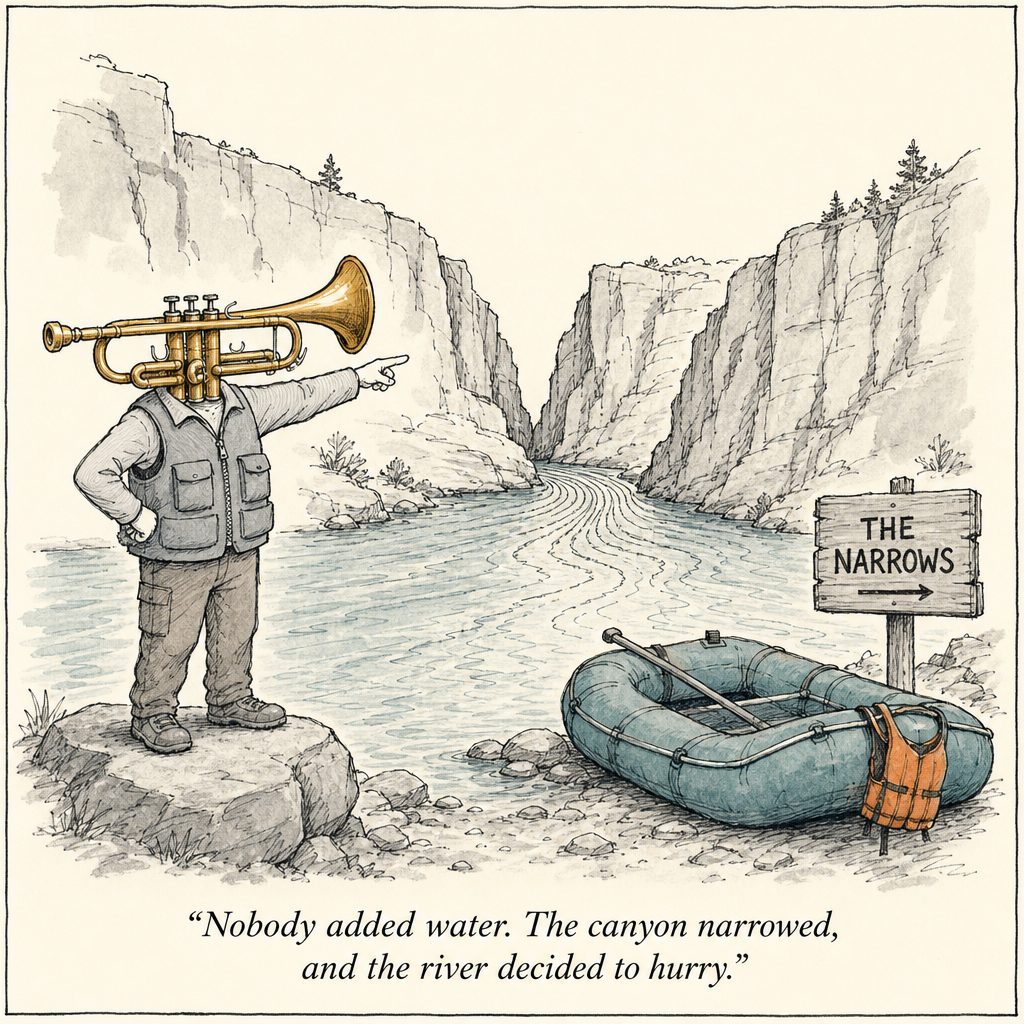
When you elevate your tongue, you shrink the space the air travels through on its way to your lips. Same air, smaller channel, higher speed. It creates a sort of funnel, and the air comes out of that funnel much faster than it went in. Faster air, faster lip vibration, higher note. That’s the entire mechanism, and it costs you nothing. No extra lung effort. No extra face strength. No mouthpiece jammed into your teeth. A muscle you’ve been using to talk your whole life rearranges itself, and the note goes up.
Now here’s why this matters more for high notes than anywhere else on the horn. Down low, the lips vibrate slowly and there’s margin for error; you can get away with lazy air and a parked tongue. Up high, the vibration is fast and fragile, and there is no margin. Every bit of speed the tongue doesn’t provide has to come from somewhere else, and the “somewhere else” is always worse: more mouthpiece pressure, more throat squeeze, more brute-force blowing. The tongue isn’t just one option among many up there. It’s the difference between the note being produced and the note being forced. I covered the forcing side of that story in why you can’t play high notes on trumpet.
The whistle test
Enough theory. Put the horn down and run this experiment right now.
Whistle a low note. Now slide it up high, slowly, and pay attention to what your tongue is doing. Really sit there and think about it. You’ll feel the tongue elevate as the pitch climbs. You’ll feel the space inside your mouth get smaller, the funnel forming, the air coming out faster. You just watched yourself speed up air with your tongue, accurately, effortlessly, on command.
That is the exact move the trumpet wants from you. You see how the tongue goes up like that? The horn works in a similar way. When you whistle higher, the tongue rises and the air accelerates; when you play higher, the same thing is supposed to happen behind your lips. If you can whistle a glissando from low to high, the motor program for high notes already exists in your body. It’s been there since you were a kid. The work isn’t building the mechanism. The work is connecting it to the horn.
That’s also what makes the whistle such an honest diagnostic. There’s no mouthpiece to mash, no chops to blame, no horn to fight. Just the tongue lever, isolated, doing its job. Whistle in the car. Whistle the phrase you’re working on. Every clean whistle is a free rep for the exact skill your upper register is missing.
Where the tongue fits in compression
Zoom out one level, because the tongue doesn’t act alone. It’s part of your compression system, and understanding that system is what separates players who use the tongue well from players who clamp it and choke.
Try this: pretend you don’t have an aperture. Put a finger over your mouth so no air can escape, and blow. Now squeeze. Squish all the air inside your mouth like you’re compacting it into a smaller and smaller space. Feel that pressure build? That is compression: energized air, loaded and waiting. You can build it with your abdominals, with the inside of your mouth, and by changing your tongue position. There’s more than one way to skin this cat, and good players use all of them together.
Here’s the payoff. When you release that energized air by opening the aperture, it speeds up as it comes out, which speeds up your lips, which is what plays high. High notes don’t come from blowing harder. They come from squeezing the air, then letting it go.
Notice what’s on the good-compression team: tongue, abs, aperture. And notice what’s not: throat squeeze, mouthpiece pressure, lip pinch. Those are the counterfeit versions, and they all share the same fatal flaw: they generate the feeling of effort while actually strangling the vibration. The tongue arch compresses the airstream while leaving it moving. A closed throat just corks the bottle. If your neck tightens and your sound thins as you arch, you’ve crossed from arching into squeezing, and you’ve traded the best lever in the system for one of the worst.
The other thing the tongue buys you up high: efficiency. Every unit of air speed the tongue provides is work your lips and lungs don’t have to do, which is why players who develop this lever don’t just gain notes, they gain minutes. Your chops last dramatically longer when the tongue is pulling its weight. I went deep on that trade in tongue position and trumpet endurance.
Build the platform before you raise the roof
Before you take any of this above the staff, a sequencing warning: the tongue can only steer air that arrives at a stable embouchure. High notes are built on the platform of a strong, secure setup, and if the platform wobbles, no amount of tongue arch will save it.
Here’s the build order I teach. First, long tones. They’re the lab, because they give you time to actually feel your embouchure while it works. Hold a comfortable note and flex the muscles different ways until the setup feels strong and secure, then memorize that feeling until you can replicate it every time. Second, add abdominal engagement: flex the abs and keep them firm underneath the same long tone, so compression from the core and security at the face learn to coexist. Third, and only after those two feel solid together, start adding range, with the tongue doing the lifting as you climb.
And be prudent about that last step. Don’t go higher than where you still feel strong and secure. The note above is built on the note below, always.
How to train it without wrecking yourself
Now the part almost everyone gets wrong: where in your range to practice this.
Do not try to install tongue awareness at your maximum range. Try it several notes below that. You’re learning a movement, not testing a limit, and you need enough spare attention to actually feel what the tongue is doing. In pyramid terms, this is foundation and development work, the comfortable 80-plus percent of your range time, not the 2 to 5 percent you spend at the ceiling.
Think of it like a golf swing. Your objective is to hit the ball, and you can swing as hard as you want, but if you miss, you’ve missed. So you groove the swing slowly and softly first, every step completed, and add power later. Same order of operations here: find the note soft, make it comfortable, and know where the tongue position is, where the embouchure is, what the abdominals are doing. Once those positions are conscious and repeatable, then you add volume and altitude. Do it in that order and the screams take care of themselves.
The best drill for connecting the tongue to real playing is the lip slur, because with no valves and no articulation, the tongue and air are the only things that can move the pitch. Do some slow slurs and notice what your tongue is doing. If it isn’t moving at all as the pitch changes, you’ve found your missing piece, and every slur from now on is a chance to install it. The full progression is in the lip slurs guide.
A note on who needs this: maybe you’re not thinking about any of this stuff, and your range is monstrous anyway. Fine. Genuinely. Your body found the pattern without a manual. But if your range is stuck, conscious control is the way in. Awareness first, then repetition, and eventually the tongue runs on autopilot again, except now it’s running the right program.
What “working on it” looks like this week
Keep it stupid simple. Whistle glissandos off the horn, daily, for free. On the horn, ten minutes of soft lip slurs in your comfortable range with your attention parked on the tongue. Then take one note near the top of your easy range, play it soft, and map it: tongue here, abs on, embouchure secure, no extra mouthpiece pressure. When that note meets my North Star, feels good, sounds good, responds easily, move the map up a half step. That’s it. No heroics, no ceiling-testing, no face-mashing. The lever is small. Let it be small.
Learn the whole system
Tongue position is one lever in a range system where air, embouchure, compression, and recovery all have to cooperate, and the sequencing is where most self-taught players get lost. Inside the 1% Trumpet Program I teach the whole chain in order, and the free 30-minute training walks through exactly how the pieces fit.
Watch the free 30-minute training. You’ve been carrying the high-note mechanism around in your mouth since you learned to whistle. Time to plug it in.
— Jesse