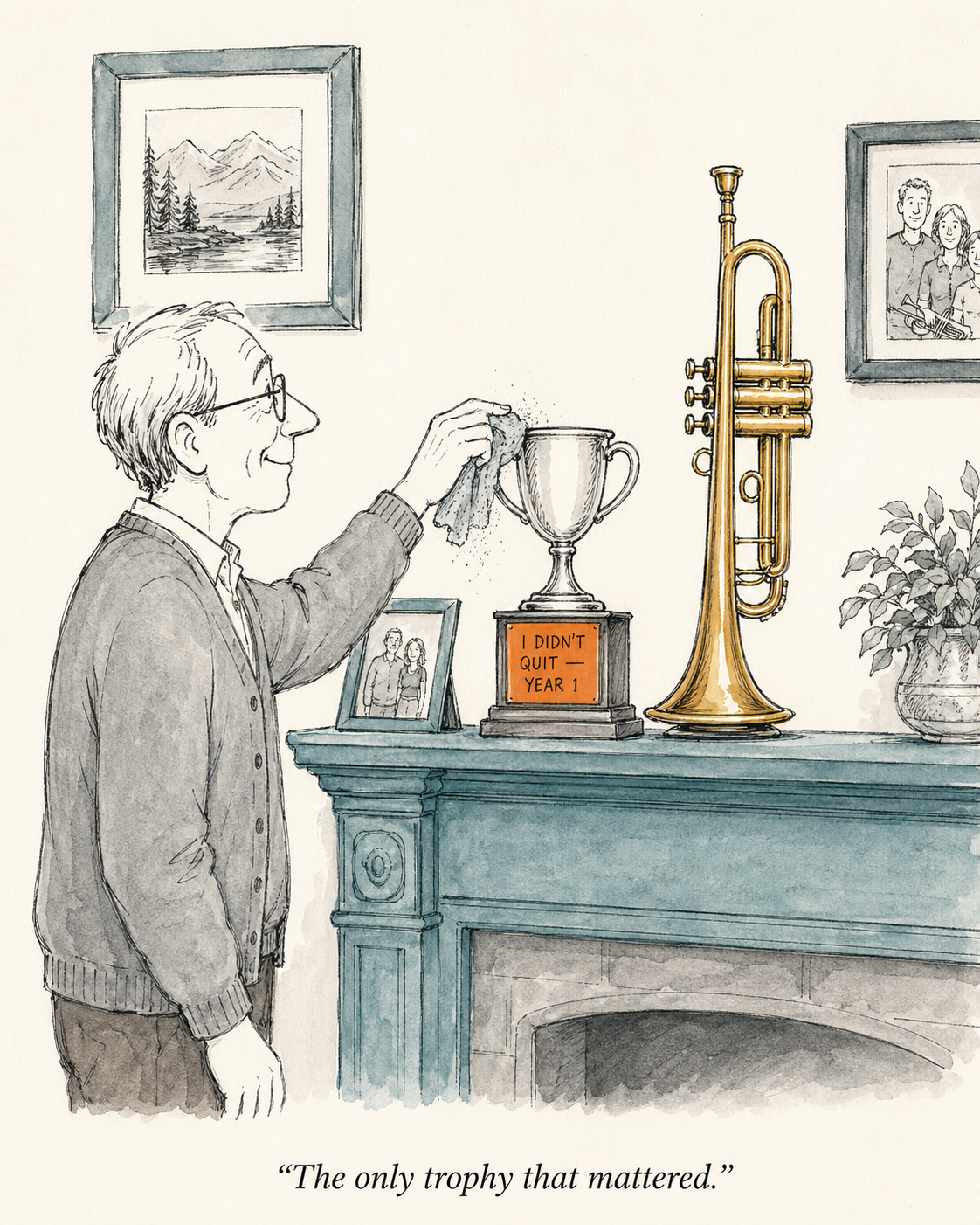
14 min read
Why your chops feel foreign — and what that’s actually telling you.
In this guide:
- What You’re Probably Feeling Right Now
- Most of This Is Normal. Temporarily.
- But We Need to Talk About Pain
- The Gym Analogy (The Honest Version)
- What Your Lips Are Supposed to Feel Like
- Why Your Lips Don’t Feel the Same Day to Day
- The Experiment That Changes Everything
- Minimum Necessary Force
- Frequently Asked Questions
- Your Lips Aren’t the Problem
Of course they feel different.
I don’t mean that dismissively — I mean it literally. Of course your lips feel different. You’re different. You’re older. You’re heavier or lighter. You’re more hydrated or less. You slept differently last night than you did a decade ago. Your face is literally not the same face it was when you last played this instrument.
Here’s something that might put this in perspective. The difference in rim diameter between a Bach 3C mouthpiece and a Bach 5C is about 0.6 millimeters. Six-tenths of a millimeter. And every trumpet player who’s ever put both of those on their face can tell the difference instantly. Not because they can measure it — because the lips are that sensitive. They register changes that your eyes can’t even see.
So yes — after five, ten, twenty years away from the instrument, your lips feel different. They should. The question isn’t why they feel different. The question is whether what you’re feeling is normal, whether it’s a problem, and what to do about it.
What You’re Probably Feeling Right Now
Let me describe the comeback experience from the neck up, and you tell me how many of these you recognize.
Too much pressure. The mouthpiece feels like it’s digging into your face. You’re pressing harder than you used to, or at least harder than you remember, and after ten minutes there’s a red ring on your lips that looks like you lost a fight with a suction cup.
Swelling. Your lips puff up during or after playing. They feel thick, clumsy, unresponsive. Maybe the swelling is visible. Maybe it’s just a sensation — like your lips have been stung by something.
Numbness. That dead, tingling feeling where you can’t quite tell what your lips are doing anymore. You know they’re on the mouthpiece, but you’ve lost the fine motor feedback. It’s like trying to type with gloves on.
Throat tightness. You feel constriction behind your tongue, like your throat is closing down. You might not even realize it’s happening until someone points it out or until you notice that your sound is thin and pinched.
Exhaustion that comes too fast. You used to play for hours. Now you’re cooked in fifteen minutes. Maybe ten. And it’s not a gradual fadeout — it’s a cliff. One minute things are working, the next minute your face is done and nothing responds.
Feeling winded. Lungs burning, gasping for air between phrases, running out of breath on passages that should be easy. Like you’re sprinting when you should be walking.
Unresponsive. You put the horn up and your lips just… don’t do anything. They sit there. You blow, and instead of a vibration, you get air. Or a splat. Or a sound that’s so thin and weak it barely registers. The connection between “I want to play a note” and “a note comes out” is broken.
Nothing feels like it used to. This is the big one. The general, pervasive sense that it used to be easy and now it’s hard. It used to be natural and now it’s foreign. Your lips don’t know what they’re doing. Your face feels like it belongs to someone else.
Most of This Is Normal. Temporarily.
Everything on that list — pressure, swelling, numbness, throat tightness, rapid fatigue, feeling winded, unresponsiveness — is a normal part of the early comeback experience. Every one. I have yet to work with a comeback player who didn’t experience at least four or five of those in the first few weeks. Some experience all of them.
So if you’re panicking — take a breath. You’re not broken. You didn’t lose some irreplaceable physical gift. You’re experiencing the completely predictable result of asking deconditioned muscles to do a precision task they haven’t done in years.
But We Need to Talk About Pain
I deliberately left something off that list, and I need to address it separately because it’s that important.
Pain.
If you are experiencing actual pain — sharp pain in your lips, stabbing in the corners of your mouth, pain in your jaw, anything that you would genuinely describe as painful rather than uncomfortable or fatiguing — stop. Immediately. Not “push through one more rep.” Not “it’ll get better if I keep going.” Put the horn down.
Pain is never an acceptable part of playing trumpet. Not during a comeback. Not during a peak. Not ever.
Now — am I saying pain never happens? No. It’s a normal part of the process in the sense that most people go through it, because most people are doing things incorrectly. Pushing too hard, using too much pressure, overblowing, chasing notes they have no business playing yet. When you do those things, pain is a predictable result. But “common” and “acceptable” are not the same thing. Just because most people experience it doesn’t mean you should tolerate it.
Here’s why this matters so much: if you play through pain, you are conditioning your nervous system to associate trumpet with hurting. You are teaching your body that picking up this instrument means damage is coming. And that association, once it’s built, is one of the hardest things in the world to undo. It becomes the foundation of the protective reflex — your body bracing against the instrument before you even play a note, because it’s learned that notes mean pain.
Do not build that association. Do not push through pain. Do not normalize it. If you’re feeling actual pain, something is very wrong — you’re either using far too much pressure, your embouchure is set up in a way that’s causing mechanical stress, or there’s an underlying issue that needs to be addressed before you continue. Ideally with someone who can watch you play and diagnose the specific problem.
Discomfort from rebuilding muscles? Normal. Fatigue from a session? Normal. Pain? Stop. Figure out why. Then fix it before you pick the horn back up.
The Gym Analogy (The Honest Version)
You’ve heard some version of the “it’s like going back to the gym” analogy before. But most people undersell it, so let me be more accurate.
If you haven’t walked into a gym in fifteen years and tried to bench press what you used to bench press, your muscles wouldn’t just shake. You wouldn’t just struggle. You straight up could not lift that weight. It’s not going anywhere. Your form collapses. The bar comes down and you’re pinned under it.
Same with a squat. If you used to squat 300 pounds and you haven’t trained in fifteen years, you’re not grinding out a shaky rep. That weight is folding you in half. You’re done before you start.
Now here’s the thing — most people aren’t silly enough to actually try that. You know why? Because the danger is visible. You can see 300 pounds sitting on the bar. You can picture exactly what happens if that lands on your neck. The risk is obvious, immediate, and life-threatening — so you instinctively start lighter. Nobody walks into a gym after a fifteen-year break and loads up their old max. The consequences are too clearly catastrophic.
On trumpet, the stakes aren’t life-or-death. Nobody dies from trying to play a high C too early. So the danger is invisible — and because it’s invisible, people do the equivalent of loading up their old max on day one. They try to play everything they used to play, at the intensity they used to play it, with a body that isn’t remotely prepared for it.
The damage isn’t a barbell on your neck. It’s subtler and slower. It’s swelling that builds over days. It’s a protective reflex that gets trained deeper with every overloaded session. It’s a cycle of destruction and recovery that never stabilizes because you keep pushing past what your body can absorb. The stakes aren’t as high, but the principle is identical: you cannot apply yesterday’s load to today’s capacity without consequences.
The smart gym-goer starts with the empty bar. The smart comeback player starts with comfortable notes and thirty minutes. Same logic.
What Your Lips Are Supposed to Feel Like
Here’s the version nobody describes for you, because most trumpet content focuses on the struggle. Let me tell you what it feels like when it’s right.
Clean, easy vibration. Your lips buzz freely inside the mouthpiece with minimal effort. Not forced. Not manufactured. The vibration starts almost on its own, like a response to the air rather than something you have to muscle into existence.
Working with physics, not against it. Here’s something worth thinking about. If we were meant to create the sound of a trumpet with just our lips — no mouthpiece, no horn — we’d fail dramatically. Go ahead, try to buzz a concert Bb in the open air with nothing on your face. It’s thin, it’s weak, it’s barely audible. That’s the whole point of the instrument.
The mouthpiece creates a cup that helps your lips vibrate efficiently. The trumpet creates back-pressure that supports the vibration and amplifies it into something you can hear across a room. The instrument is engineered to do the heavy lifting. The mouthpiece isn’t your enemy. The horn isn’t your adversary. They’re the tools that take the tiny, delicate vibration of your lips and magnify it into the sound of a trumpet.
And yet — trumpet players insist on doing all the work. Pressing harder. Blowing harder. Forcing the sound. Fighting the instrument instead of letting it do what it was literally built to do.
When you stop fighting, here’s what happens: the pressure drops to almost nothing. The swelling stops. The numbness disappears. Your endurance extends from minutes to hours. And your lips start to feel the same every day — not because nothing changes, but because you’re not destroying them and then trying to rebuild from scratch every session.
Why Your Lips Don’t Feel the Same Day to Day
Your body fluctuates daily. You gain or lose two pounds of water weight. Your hydration changes. Your sleep changes. Your stress level changes. Even professional trumpet players feel the difference from one day to the next — you put the horn on your face in the morning and something’s slightly off from yesterday. That’s normal. That’s just being human.
Daily practice is what mitigates that variation into something that still feels like consistency. When you play every day, the fluctuations are small enough that your body adjusts automatically. Your warm-up recalibrates. Your muscles find the groove. By ten minutes in, yesterday and today feel the same.
But that’s the normal day-to-day version. The reason YOUR lips feel wildly different — the comeback version — is something else entirely. It’s not natural fluctuation. It’s that you’re not giving them a chance to feel the same.
You’re constantly fatiguing yourself. Constantly shooting for notes that are above your current ability. Constantly chasing more power, more range, more intensity. You practice until your face is dead, take a day or two off to recover, come back and push hard again because you feel like you lost ground, and the whole thing repeats. The cycle never stabilizes because you never let it stabilize. You’re making the most common mistakes and then blaming your lips for the result.
Here’s what would happen if you stopped that cycle.
The Experiment That Changes Everything
Try this for one week. Just one week.
Play in the middle register. If the middle register is too high for you right now — if G on top of the staff feels like a stretch — play in the low register. Pedal tones, lip slurs below the staff, long tones on comfortable notes. Nothing that requires strain. Nothing that requires effort beyond what feels easy and natural.
Thirty minutes a day. Light intensity. No chasing. No testing. No “let me just see if I can hit that note.” Just easy, comfortable playing that lets your lips do their job without punishing them for it.
Do that for seven days and watch what happens.
Your lips will feel amazing. They’ll feel responsive, alive, ready. Not numb, not swollen, not dead. You’ll put the horn on your face on day five and think, “Wait — this actually feels good.” By day seven, you’ll feel like you’ve been massaged at a five-star resort instead of trampled by a stampede of buffalo.
And here’s the revelation: that’s not a trick. That’s not a temporary hack. That’s what it feels like when you play trumpet in a way that doesn’t cause the problems. That’s the baseline. That’s what’s available to you every single day, if you stop burying it under cycles of overexertion and damage.
The problem was never your lips. The problem was what you were asking them to do.
Minimum Necessary Force
There’s a concept I come back to over and over with my students: minimum necessary force. The least amount of effort required to produce the result you want.
You don’t need a wheelchair the next day after doing squats to know you had an effective workout. In fact, if you need a wheelchair, you did it wrong. You went past the point of productive stress into the territory of damage. And damage doesn’t build muscle — it requires recovery from damage.
Trumpet works the same way. You need enough demand to create adaptation — to push the muscles slightly beyond their comfort zone so they grow stronger. But “slightly beyond” is the key phrase. Not “dramatically beyond.” Not “catastrophically beyond.” Slightly.
When you overshoot — when you play until your face is numb, when you chase notes that require maximal effort, when you push through fatigue in the name of “building chops” — your nervous system can’t absorb all of that stimulus. It doesn’t integrate it as growth. It interprets it as damage, and it responds accordingly: swelling, numbness, protective tension, shutdown. The protective reflex fires, and now tomorrow’s session starts from a worse position than today’s did.
This is why your lips feel different every day. Not because the trumpet is unpredictable — because your approach is creating chaos instead of consistency. Fix the approach, and your lips will tell you a completely different story.
Frequently Asked Questions
Is some swelling normal during a comeback?
In the first week or two, mild swelling during or after playing is normal — your muscles are reconditioning and blood flow is increasing to tissue that hasn’t been used this way in years. What’s NOT normal is significant swelling that lasts hours after playing, swelling that gets worse over time rather than better, or swelling accompanied by pain. If it’s not improving by week three with controlled, moderate playing, your intensity is too high.
How long until my lips feel “normal” again?
If you’re managing your load properly — playing within your comfortable range, keeping sessions at 30 minutes, alternating intensity — most players report their lips feeling consistently responsive within three to four weeks. If you’re pushing too hard, it can take months because you keep resetting the clock with every overexertion cycle.
Should I use lip balm or any products?
Keep your lips hydrated — basic lip balm is fine before and after playing. Avoid anything medicated or numbing. Some players swear by specific products, but hydration and not destroying your chops in the first place will do more for you than any cream.
My lips tingle after playing. Is that a problem?
Depends on what kind of tingle we’re talking about.
The good tingle: Play low notes for about 15 minutes, or even just flap your lips like a horse for a few minutes — keep that vibration going. When you take the horn off your face, your lips will tingle. It’s a warm, buzzy sensation, almost pleasant. That’s your lips telling you they were sitting there vibrating freely, doing exactly what they’re supposed to do. The mouthpiece pressure wasn’t winning — your lips had room to move, room to vibrate, and now they’re humming with the aftereffect of that. That’s a great sign. If you’re feeling that, good. You’re on the right track.
The bad tingle: This one feels different and you’ll know it. It’s sporadic — not a uniform buzz, but random firing. Pins and needles. Involuntary muscle twitches in your lips or corners. That’s not vibration afterglow — that’s nerves getting pinched or compressed from too much mouthpiece pressure, or muscles that have been overworked to the point of involuntary contraction. It’s the same thing that happens to your legs after you’ve been sitting on them wrong — except you did it to your face with a mouthpiece.
If it’s the warm, uniform buzz after easy playing — keep going. If it’s the sporadic, twitchy, pins-and-needles version — you’re overdoing it. Scale back the pressure, scale back the intensity, and give your lips the chance to vibrate instead of getting crushed.
I feel like I’m using way more pressure than I used to. Why?
Because your embouchure muscles are weak, and your body compensates with the only other tool it has — pressing the mouthpiece harder against your face. It’s a strength compensation, not a technique choice. As your muscles recondition through consistent, moderate playing, the pressure will naturally decrease. Trying to force less pressure before the muscles are ready just creates a different set of problems. Build the strength first; the pressure drops on its own.
Your Lips Aren’t the Problem
If you’ve been panicking about how your lips feel after your first few sessions back — relax. Everything you’re experiencing has a cause, and the cause isn’t that you’re broken or too old or that you lost some irreplaceable gift.
Your lips are the most sensitive, responsive part of the trumpet system. They’re telling you exactly what’s happening. The question is whether you’re going to listen to them or override them.
Stop overriding them. Play within your ability. Manage your load. Give them a chance to feel good instead of constantly wrecking them and wondering why they never stabilize.
Do that, and you’ll discover something that changes everything about your comeback: the trumpet can feel easy. Not easy like it requires no effort — easy like you’re working with the instrument instead of against it. Easy like the physics are on your side. Easy like your lips are doing exactly what they were designed to do, and the trumpet is doing the rest.
That’s what’s waiting for you on the other side of this.
Watch the Free Training: “Why Your Trumpet Playing Got Worse (And the 3-Step System to Fix It)”
If this article got you fired up, the free training goes deeper. The same diagnostic-first system used inside the 1% Trumpet Program — the protective reflex framework, the 2:1 ratio in action, and the systematic rebuild that actually works for adult players.
Stop fighting the instrument. Start listening to your lips.
About the Author
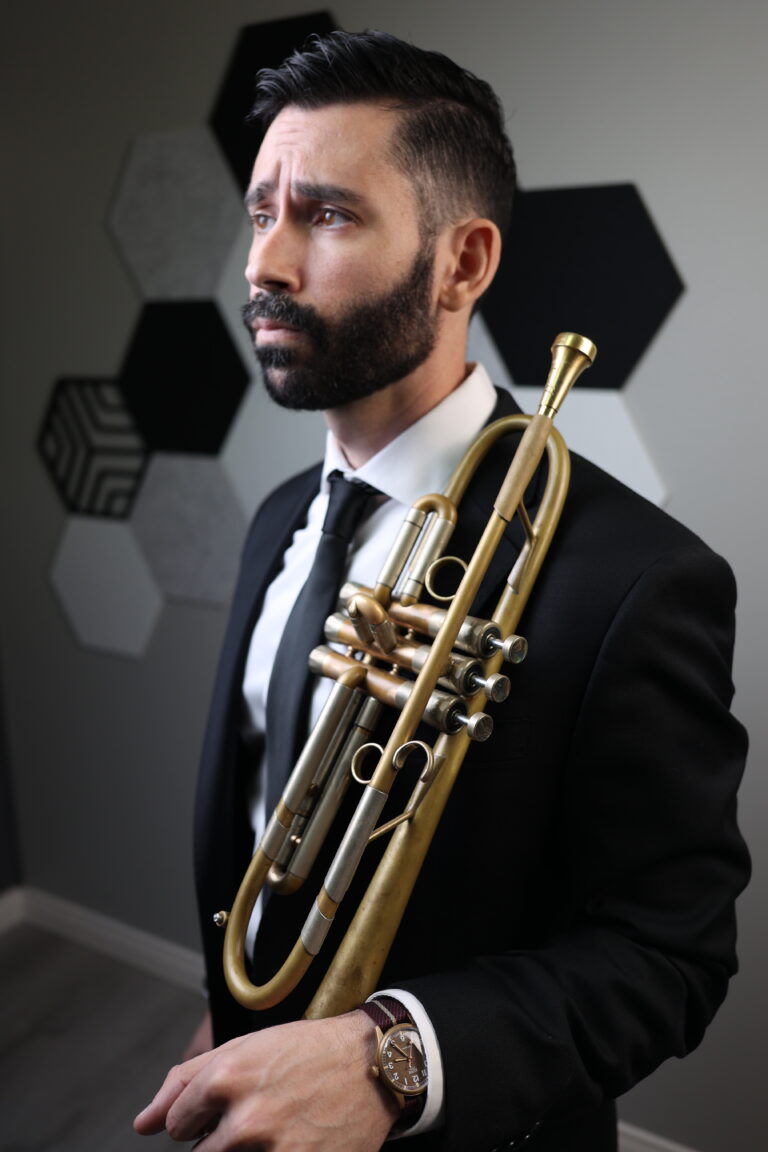
Jesse Garcia
Founder, 1% Trumpet Program
Jesse is a working trumpeter and teacher. He’s performed with the Glenn Miller Orchestra, freelanced on the Las Vegas commercial scene, played extended cruise ship contracts around the world, and served as a trumpeter in the United States Army. He’s worked hands-on with over 100 trumpet players — from beginners to comeback players to seasoned pros — and reaches an audience of 75,000+ across his social platforms. He founded the 1% Trumpet Program to teach what actually works for adult players, drawing on the same systems he uses to keep his own chops sharp on the road.
Want the full system in 30 minutes? Watch the free training — the same diagnosis-first framework I use with every player in the 1% Trumpet Program.
RELATED READING
- My Embouchure Stopped Working: How to Diagnose It — the five-branch diagnostic when the lips feel wrong.
- The Lips Do Not Lie — reading the signals your face is sending.
- How to Read Your Own Embouchure — the five-gauge weekly scan.
- The Complete Embouchure Guide — the map of the whole system.