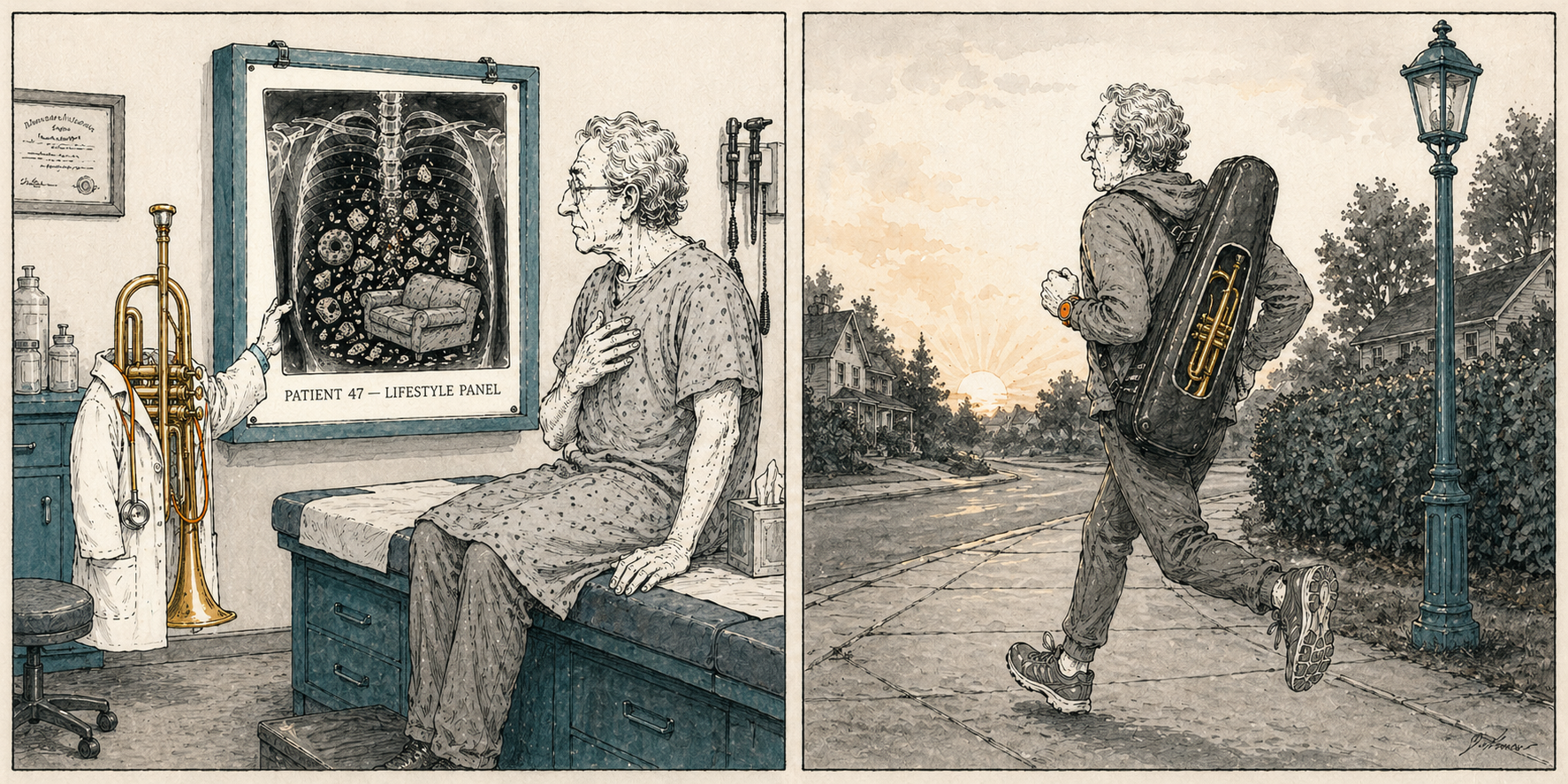
Let me tell you a story about a trumpet player I once knew. He was talented, really talented. He could play high C’s with ease. His tone was beautiful. His technique was solid. By all accounts, he should have been one of the best trumpet players in the area.
But he wasn’t. And do you know why? Because he didn’t sleep. He stayed up late, every night, doing who knows what. And as a result, his chops were always tired. His tone was inconsistent. He couldn’t play well until he’d been playing for an hour, and by then he was already exhausted.
He had all the talent in the world, but he was sabotaging himself with his lifestyle.
This is what I want to talk about today. Because the hard truth about trumpet playing is this: your playing is directly affected by your health and your habits. You can have the best technique in the world, the best mouthpiece, the best teacher, but if your health and your habits are bad, you’re going to struggle.
Let’s start with sleep. Sleep is when your body recovers. Sleep is when your muscles repair themselves. Sleep is when your brain consolidates memories and learning. If you’re not sleeping enough, your body is in a constant state of stress and fatigue.
And trumpet playing demands a lot from your body. Your embouchure muscles are being used intensely. Your air support muscles are working hard. Your brain is processing complex information. If you’re not giving your body the recovery it needs, you’re essentially trying to run a marathon while deprived of sleep.
So how much sleep do you need? The general recommendation is seven to nine hours per night. That’s not a luxury. That’s a minimum. And if you’re a serious trumpet player, if you’re training hard, you might need even more.
But here’s the thing: sleep is often the first thing trumpet players sacrifice. They tell themselves they’re too busy. They have work, they have school, they have a hundred other things going on. So they cut back on sleep. And then they wonder why their playing is suffering.
This is where I have to be blunt: if you’re not willing to prioritize sleep, you’re not serious about improving your trumpet playing. Because sleep is non-negotiable. It’s as important as practice. More important, actually.
Next, let’s talk about nutrition. Your body is like a machine, and you need to fuel it properly. If you’re eating junk food, if you’re not getting enough nutrients, your body isn’t going to perform well.
I’m not saying you have to eat a perfect diet. But you should be mindful of what you’re putting into your body. Eat plenty of vegetables. Eat enough protein. Stay hydrated. These aren’t complicated things, but they make a big difference.
And there’s something else: alcohol. I’m going to say it straight. If you’re going out drinking the night before a performance, you’re sabotaging yourself. Alcohol dehydrates your body, it impairs your sleep, and it affects your coordination. So if you want to play well, you need to make good choices about alcohol.
This is hard for some people to hear, especially if they’re in a social setting where drinking is expected. But here’s the truth: your trumpet is more important than your social reputation. If you want to be a good player, you have to be willing to make sacrifices.
Next, let’s talk about exercise. Trumpet playing is a physical activity. It requires strength, flexibility, and endurance. And if your body isn’t in good condition, your playing is going to suffer.
You don’t have to be an athlete. You don’t have to go to the gym for three hours a day. But you should do some form of regular exercise. Go for walks. Do some yoga. Lift some weights. The point is to keep your body in reasonable condition.
And there’s a bonus: regular exercise is good for your mental health. It reduces stress, it improves mood, and it improves sleep. All of which are beneficial for trumpet playing.
Next, let’s talk about practice habits. How you practice matters just as much as how much you practice. If you’re practicing while tired, if you’re practicing while distracted, if you’re practicing while stressed, you’re not going to get much benefit from that practice.
So create a practice environment that supports good playing. Practice when you’re fresh. Practice in a quiet place where you can focus. Practice when you’re mentally ready.
And here’s something else: don’t practice when you’re sick. I know the temptation is there. You think, “I’ll just do a short practice session.” But playing trumpet when you’re sick is a good way to make your sickness worse. It’s also a good way to develop bad habits. So when you’re sick, rest. Let your body recover.
Finally, let’s talk about stress management. Stress is one of the biggest killers of good trumpet playing. When you’re stressed, your embouchure tightens. Your breathing becomes shallow. Your tone suffers. Your ability to handle difficult passages is diminished.
So you need to have strategies for managing stress. For some people, that’s meditation. For some, it’s exercise. For some, it’s talking to a friend. For some, it’s a combination of things. Find what works for you, and make it a regular part of your life.
Here’s the hard truth: trumpet playing is not just about what you do in the practice room. It’s about your entire lifestyle. Your sleep, your nutrition, your exercise, your stress management. All of these things affect your playing.
And if you’re serious about becoming a good trumpet player, you have to be willing to address all of these areas. You can’t just work on your technique and ignore everything else. It doesn’t work that way.
So take a hard look at your life. Are you sleeping enough? Are you eating well? Are you exercising? Are you managing your stress? If the answer to any of these is no, then you’ve found your biggest opportunity for improvement.
Because the truth is, the difference between a good player and a great player is often not in their technique. It’s in their lifestyle. It’s in their habits. It’s in their willingness to take care of themselves.
So start there. Start with the fundamentals of health and habit. And then build your trumpet playing on top of that foundation.
The results might surprise you.
Want this kind of thinking applied to your own playing?
The free 30-minute training reveals the same framework I use with my 1% Trumpet Program students — the one most comeback players never figure out on their own.
Watch the free training →Want the full system in 30 minutes? Watch the free training — the same diagnosis-first framework I use with every player in the 1% Trumpet Program.