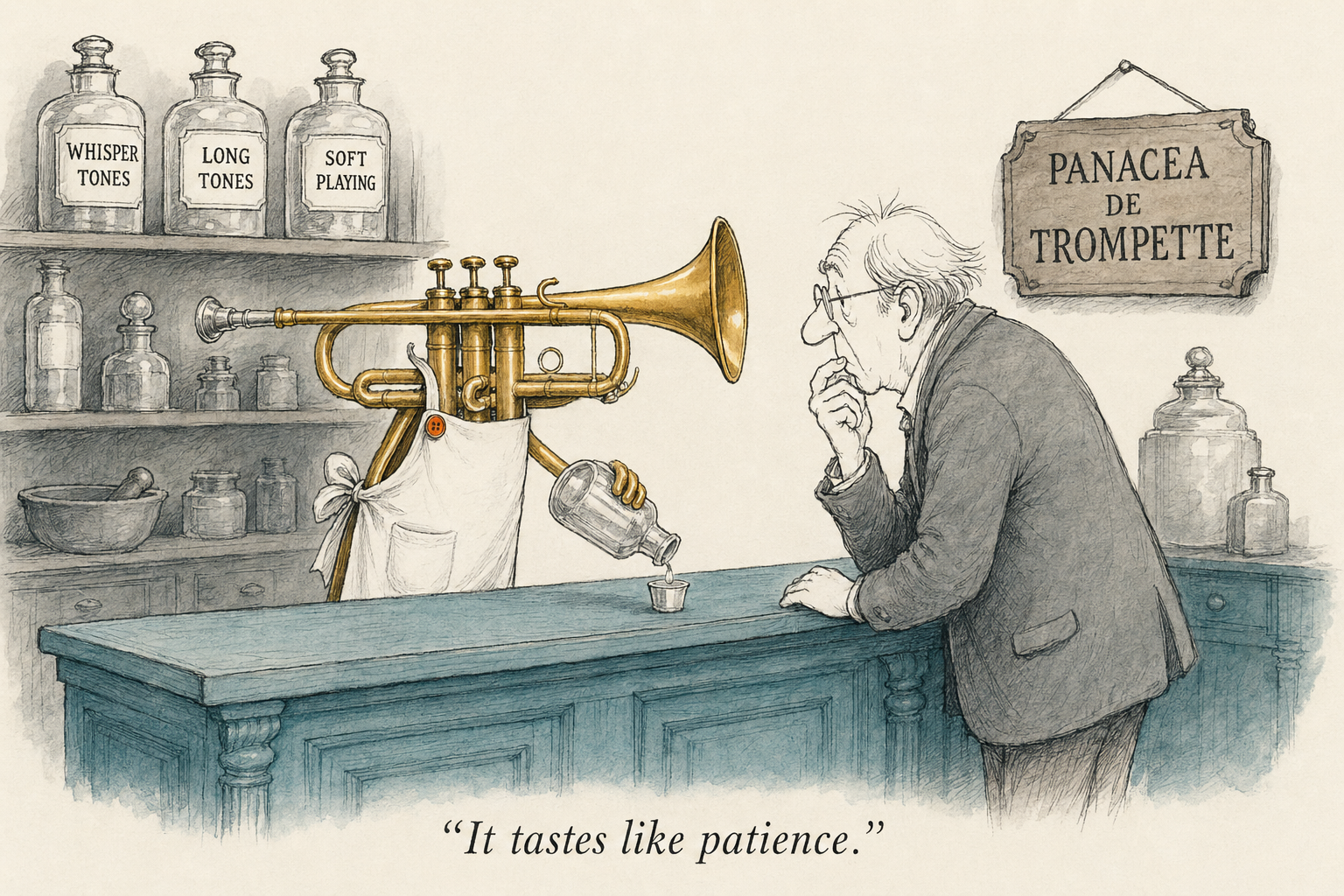
(Note: The title “Panacea de Trompette” is a fusion of the word “panacea,” which means a remedy for all difficulties or problems, and “trompette,” the French term for trumpet. Together, they allude to the idea that the trumpet technique discussed in this post serves as a comprehensive solution to common challenges faced by trumpet players.)
Many of you have heard me tout the benefits of playing the trumpet softly for quite some time. However, as with anything tied to the intricacies of human cognition, good information bears repeating. It’s all too easy to forget — I forget often!
Given that information alone is insufficient for proficient trumpet playing, I will present this knowledge as a challenge. This way, theory can be put into practice, allowing you to genuinely grasp the power of this straightforward technique.
For this entire week, play softly. How soft? As soft as you can. Master your whisper tones and then add some sound and play at pianissimo and piano.
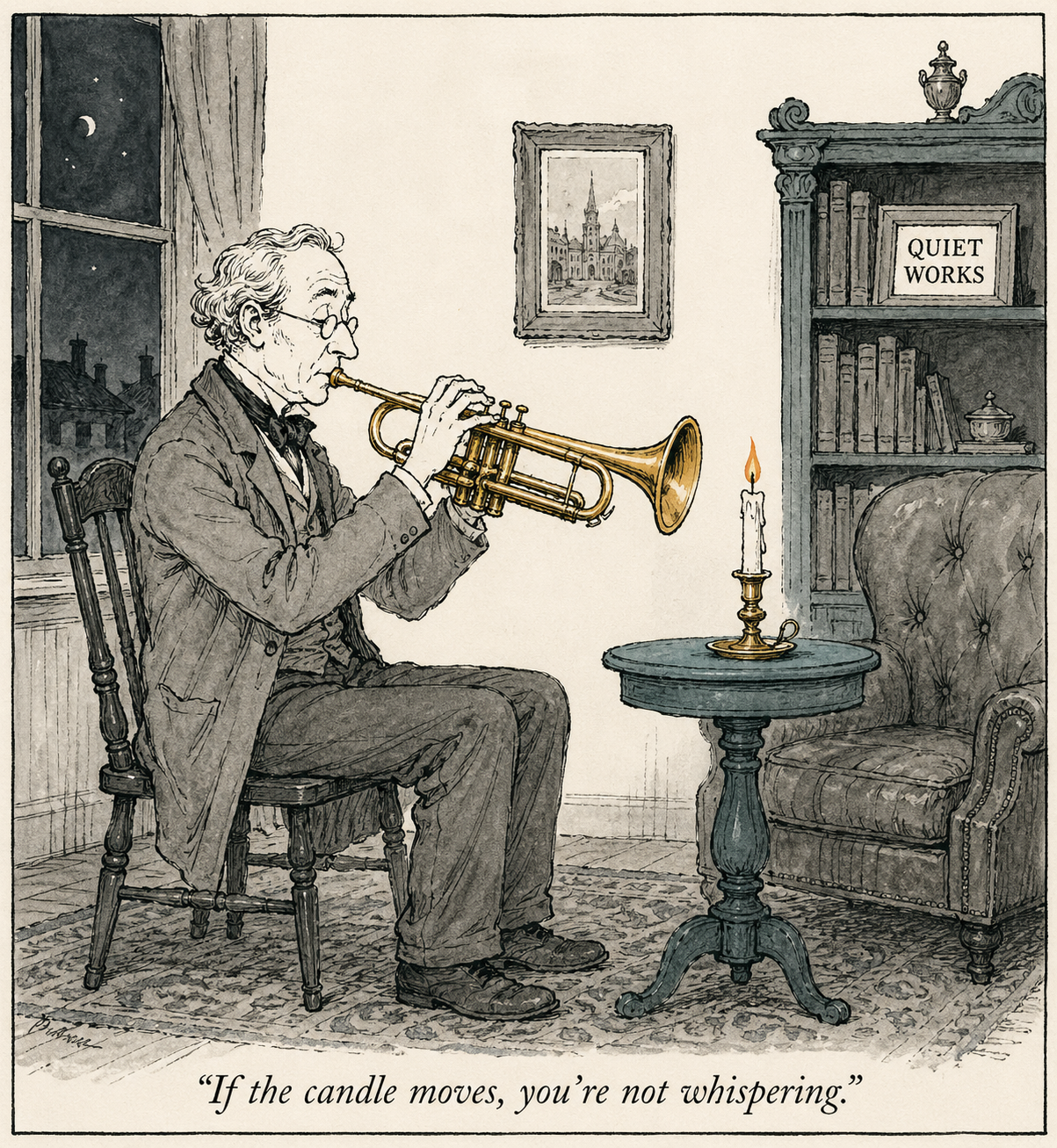
The aim of this exercise is not to limit you to soft playing forever, but to recalibrate your approach and fine-tune your technique. Here’s a deeper look at what you stand to gain:
1. Rediscovering your whisper tones
By concentrating on whisper tones, you engage with the trumpet at its most fundamental level. This means that you’re working on the core of your sound production without the interference of excessive force. It’s similar to an artist sketching lightly before committing to bold strokes — the foundation is being laid for something robust.
2. Efficiency in air use
Soft playing requires a more efficient use of your air. You learn to use just the right amount of air to produce a sound, ensuring that you don’t waste any. Over time, this leads to better breath control and stamina.
3. Enhanced lip sensitivity
When you play softly, your lips need to be more responsive to the subtle changes in air pressure. This heightened sensitivity can improve your ability to play across different dynamics and registers with more control.
4. Reduced physical strain
Playing loudly for extended periods can take a toll on your embouchure. By focusing on soft playing, you give your lips a chance to recover while still practicing. This can be especially beneficial for those recovering from embouchure issues or those who tend to use excessive pressure.
5. Improved intonation
Soft playing often exposes intonation issues that might be masked at louder dynamics. By addressing these at a softer volume, you refine your ear and improve your overall pitch accuracy.
6. Development of tonal colors
Playing softly introduces you to a range of tonal colors that are often overlooked. This can enrich your musical expression and give you more tools to convey emotion through your playing.
7. Mental focus and discipline
It’s surprisingly challenging to maintain a consistently soft sound. This exercise will test and enhance your concentration and discipline, skills that will benefit all aspects of your playing.
Now, going back to the challenge. At the end of the week, when you return to your usual playing dynamics, you might notice a remarkable difference. The exercises you’ve been working on may feel easier, your sound might be richer, and your overall approach to the trumpet will likely be more informed and refined.
Remember, the trumpet is not just about power and volume. It’s about control, expression, and understanding the instrument at its deepest level. By embracing the soft side of playing, you’re not taking a step back; you’re taking a profound leap forward.
So, are you up for the challenge? Let this week be a testament to the panacea that is soft playing. Dive in, stay committed, and experience the transformation for yourself.
Happy practicing!
Want this kind of thinking applied to your own playing?
The free 30-minute training reveals the same framework I use with my 1% Trumpet Program students — the one most comeback players never figure out on their own.
Watch the free training →Want the full system in 30 minutes? Watch the free training — the same diagnosis-first framework I use with every player in the 1% Trumpet Program.