
A note before we go further: the framework in this essay isn’t original to me. I’m adapting it from Mike Mentzer, the bodybuilder behind the “Heavy Duty” high-intensity training philosophy. Mentzer was a Mr. Universe winner (1978, with the first perfect score) and one of the most influential thinkers in physical training. His core insight was that growth comes from brief, intense stimulus followed by extensive recovery, not from grinding longer hours. What I’ve done is translate his principles for trumpet practice, because the parallels are exact — the chops respond to stress and recovery the same way muscle does. The three-stage stress response itself traces further back to Hans Selye, the endocrinologist who described the General Adaptation Syndrome in the 1930s. Credit where it’s due. Both of them figured this out long before I picked up a horn. If you want the bodybuilding version in Mentzer’s own words, his book Heavy Duty is the place to start.
Trumpet playing is a form of stress that we can control simply by varying the intensity, duration, and frequency of our practice. Our body’s response to this stress involves three distinct stages:
1. A general alarm reaction.
During this initial stage, our body recognizes the stress of trumpet playing as a potential threat. It triggers a fight-or-flight response, increasing heart rate, releasing stress hormones, and heightening our senses. This is the body’s way of preparing itself to deal with the new demand being placed on it.
2. A stage of adaptation (or overcompensation).
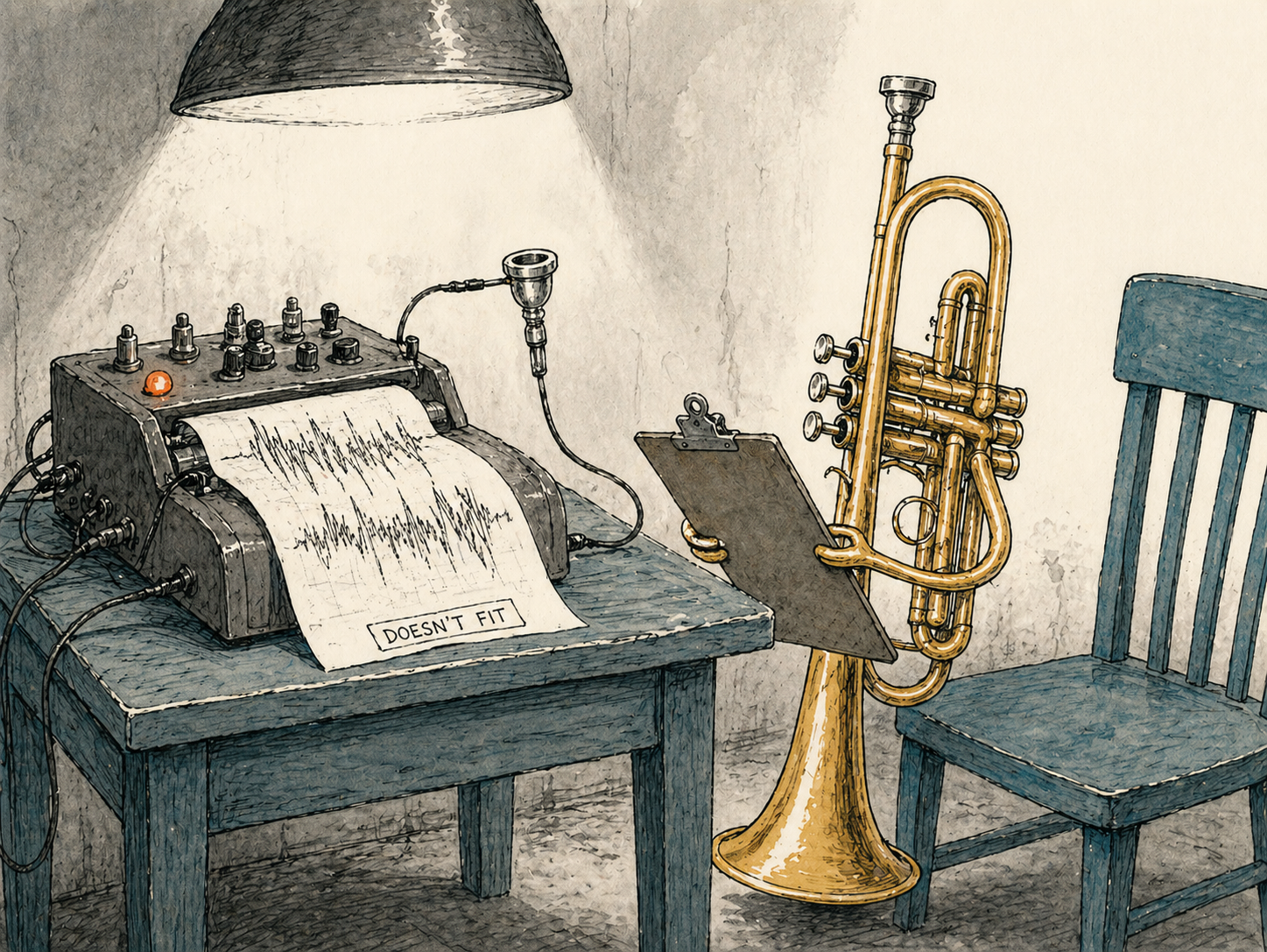
In this stage, the body begins to adapt and build resilience. Through consistent and well-managed practice, the body learns to handle the stress more efficiently. Muscles strengthen, endurance increases, and technique improves. This overcompensation is where growth occurs, as the body becomes better equipped to handle the demands of trumpet playing. However, if the stress continues for too long without proper recovery, we risk moving into the next stage.
3. A stage of exhaustion (if the stress persists).
If the stress from trumpet playing is sustained without sufficient breaks or proper recovery, the body enters the stage of exhaustion. At this point, the adaptive mechanisms start to weaken, and performance begins to decline. Physical and mental fatigue become more pronounced, and the risk of injury increases. This is when the body’s ability to handle the stress becomes compromised, leading to potential setbacks if not addressed promptly.
To illustrate these stages further: Imagine the stress of the sun. With just enough exposure, you get a positive effect (overcompensation) in the form of a tan. If exposed for too long, beyond a certain point (exhaustion), you experience a negative effect (decompensation) in the form of burns or blisters.
Similarly, think of how calluses form on your hands. When exposed to repeated friction or pressure, your skin adapts and thickens as a defense mechanism. However, if the exposure is too intense or too prolonged without rest, you might get blisters or even wounds.
The 1% takeaway: These principles highlight the importance of balanced practice. By understanding the body’s stress response, we can optimize our practice routines, ensuring we push ourselves enough to grow (overcompensation) without tipping into the realm of exhaustion.
So, the next time you pick up your trumpet, consider the stress you’re placing on your body. Are you in the alarm stage, feeling the initial challenge? Are you adapting and growing? Or are you pushing too hard and heading towards exhaustion? By tuning into these stages, you can make more informed decisions about your practice, ensuring long-term growth and health.
Remember the sun and the calluses. Aim for the tan, not the burn. Aim for the callus, not the blister.
Want this kind of thinking applied to your own playing?
The free 30-minute training reveals the same framework I use with my 1% Trumpet Program students — the one most comeback players never figure out on their own.
Watch the free training →Want the full system in 30 minutes? Watch the free training — the same diagnosis-first framework I use with every player in the 1% Trumpet Program.