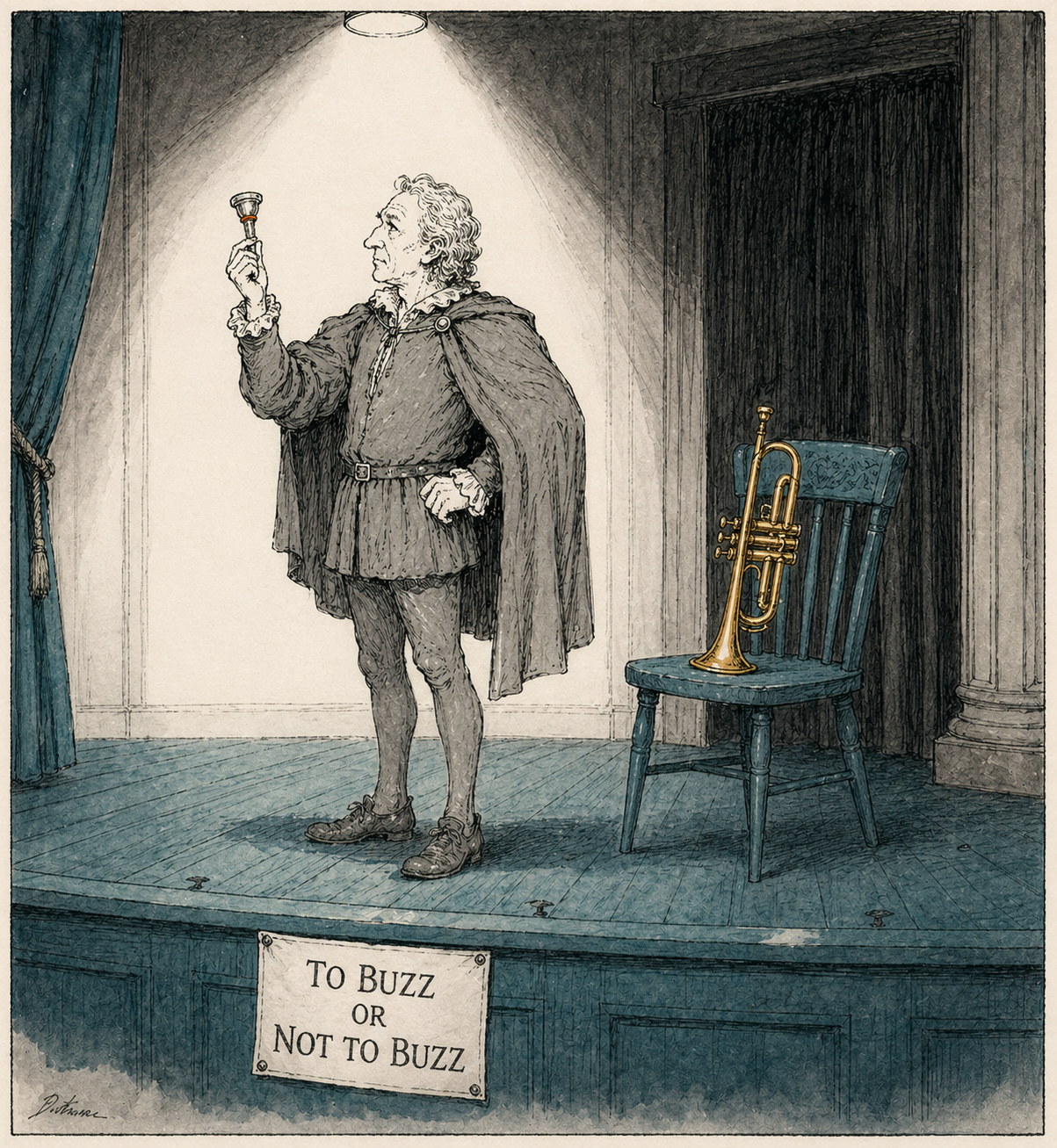
The buzz. It’s a fundamental tool in the trumpet player’s toolkit. Or is it? Ask ten trumpet teachers and you might get ten different opinions on how to use buzzing, when to use buzzing, and whether buzzing is even a good idea.
Some teachers swear by buzzing as the foundation of everything. They have their students buzz all day long. Buzz on the mouthpiece. Buzz without the mouthpiece. Buzz to a specific pitch. Buzz to a rhythm. Buzz, buzz, buzz, buzz.
Prefer to watch? Here is the short version.
Other teachers avoid buzzing altogether. They see it as a crutch, a shortcut that prevents students from learning proper embouchure technique. They believe that if you rely on buzzing, you’ll never develop the real skill that’s needed to play trumpet.
Then there are the teachers in the middle, who use buzzing as a tool but not the be-all and end-all of trumpet playing. They understand that buzzing has its place, but it’s not the whole picture.
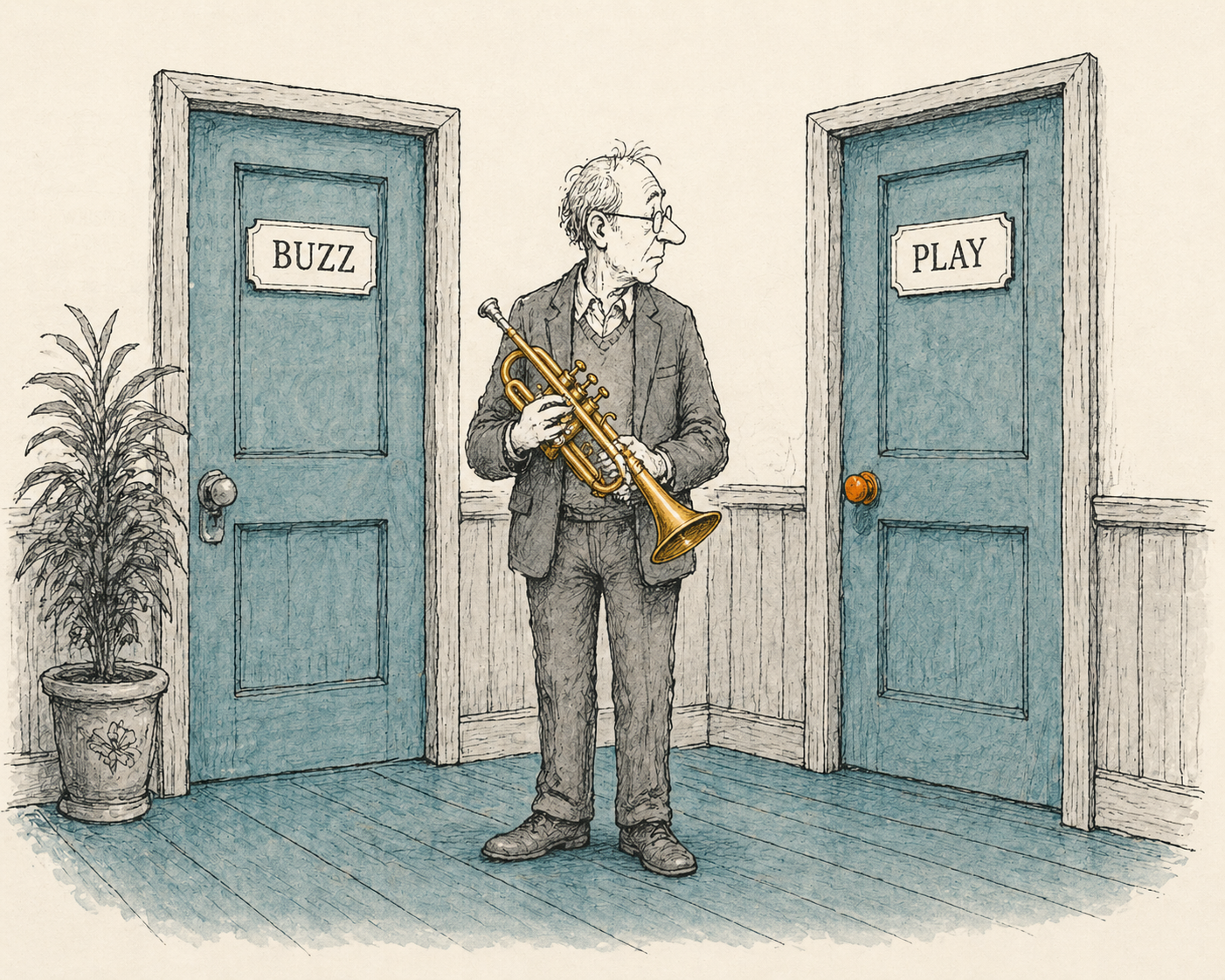
So what’s the truth? Is buzzing good or bad?
The answer, like most things in trumpet playing, is nuanced. Buzzing can be a valuable tool, but it can also be misused. Let me explain.
First, let’s talk about what buzzing actually is. Buzzing is the vibration of your lips when you blow air between them without a trumpet or mouthpiece (or sometimes with them). This vibration is created by air pressure, and it’s the fundamental sound source for trumpet playing. Without the ability to create a buzz, you can’t play trumpet.
So from that perspective, buzzing is essential. Every trumpet player needs to be able to buzz. If you can’t buzz, you have a fundamental problem that needs to be addressed.
Now, the question becomes: should you practice buzzing, and if so, how?
Here’s my take: buzzing is a diagnostic tool and a warm-up tool, but it’s not a substitute for actual trumpet playing.
As a diagnostic tool, buzzing can tell you a lot about your embouchure. If you can’t buzz a steady pitch, if your buzz is uneven or weak, if you can’t control your buzz, then these are signs that something might be off with your embouchure or your breathing. Buzzing can help you identify these issues.
As a warm-up tool, buzzing can prepare your embouchure for playing. It gets your lips ready, it gets the air moving, and it can help you focus on the fundamental vibration that underlies all trumpet playing.
But here’s where many players go wrong: they think that being able to buzz really well means they’ll play trumpet really well. This is not necessarily true. Buzzing is a simplified version of trumpet playing. It doesn’t include the mouthpiece, the leadpipe, the valves, or any of the other mechanisms that are involved in actually playing trumpet. As a result, buzzing doesn’t tell the whole story.
For example, you might have a really strong buzz, but if your air support is inconsistent, your trumpet playing will suffer. You might have a great buzz, but if you don’t understand how to use your tongue for articulation, your trumpet playing will suffer. You might have an amazing buzz, but if you’re holding tension in your shoulders, your trumpet playing will suffer.
In other words, a good buzz is necessary but not sufficient for good trumpet playing.
This is why I think of buzzing as a tool, not a goal in itself. Use buzzing to warm up, use buzzing to diagnose problems, but don’t spend hours and hours trying to perfect your buzz. Spend those hours playing trumpet.
Here’s what I recommend: do some light buzzing at the beginning of your practice session. Buzz for a minute or two to get your lips ready. Maybe buzz to a few different pitches to make sure your range is feeling good. But then move on to actual trumpet playing.
If you encounter a specific problem during your practice session, use buzzing to diagnose it. Can’t hit a high note? Try buzzing that pitch and see if you can buzz it. If you can, then the problem is probably with your mechanics on the trumpet. If you can’t, then the problem might be with your embouchure or air support.
But in general, don’t make buzzing the center of your practice routine. Make actual trumpet playing the center. Because ultimately, the goal is to play trumpet, not to buzz.
So to answer the original question: to buzz or not to buzz? The answer is yes, buzz. But buzz as a tool, not as a goal. Warm up with a little buzzing, use it for diagnosis when needed, and then get on with the business of playing trumpet.
That’s my take, anyway. And I’m sure there are teachers out there who would disagree with me. But if your main goal is to improve your trumpet playing, then I believe this approach will serve you well.
Want this kind of thinking applied to your own playing?
The free 30-minute training reveals the same framework I use with my 1% Trumpet Program students — the one most comeback players never figure out on their own.
Watch the free training →Want the full system in 30 minutes? Watch the free training — the same diagnosis-first framework I use with every player in the 1% Trumpet Program.
RELATED READING
- How a Trumpet Actually Makes Sound — why free-buzzing is a different physical system than playing.
- The Trumpet Aperture — what the buzz actually is, mechanically.
- The Embouchure Pillar Guide — where buzzing fits in the larger system.