
13 min read
Going it alone or getting help — the math behind the highest-leverage decision in your comeback.
In this guide:
- How Did You Learn the First Time?
- The Thing You Can’t Do for Yourself
- “But There’s So Much Free Information Out There”
- The Diagnosis Problem
- What It Actually Costs to Go Alone
- “But I Can’t Afford a Teacher”
- The Real Question
- When to Pull the Trigger
- What to Look for in a Coach
- Frequently Asked Questions
- The Decision You’re Actually Making
I’m going to be upfront about something before we start. I run a trumpet coaching program. I have a financial interest in you deciding to get help. You should know that.
I’m also going to tell you the truth, because the truth is more compelling than any sales pitch, and because I’d rather you make the right decision with full information than get talked into something that isn’t right for you.
So here’s what I actually think, as honestly as I can say it: whether you get a teacher, a coach, a program, or anything else — that’s your decision. But the idea that you can do this completely alone, with no guidance, no feedback, no outside perspective? That’s not independence. That’s ego. And I say that with love, because I’ve been that guy.
Let’s work through this.
How Did You Learn the First Time?
I want you to think about this seriously, because it’s the question that unravels the whole “I’ll figure it out myself” argument.
How did you learn to play trumpet in the first place?
You had a band director. Most of you had a private teacher at some point. You had a section — other trumpet players sitting next to you every single day. You had friends who played. You had rivals who pushed you. You had ensembles that required you to perform regularly. You had concerts with deadlines that forced preparation. You had chair placements that gave you brutally honest feedback on where you stood. You had daily immersion in a musical environment for years.
That’s how you became the player you’re trying to get back to.
Now look at your current setup. You’re sitting in your living room. Alone. With a YouTube video as your teacher and a Facebook forum as your section.
You had an entire infrastructure built around your development — teachers, peers, accountability, performance pressure, daily immersion — and that’s what produced the player you remember being. Now you’ve stripped away every piece of that infrastructure and you’re expecting the same result?
That’s not a plan. That’s a hope.
The Thing You Can’t Do for Yourself
Here’s the fundamental problem with going it alone, and it has nothing to do with motivation or discipline or access to information.
You can’t see your own playing.
You can feel it. You can hear it — sort of, a filtered version from inside your head. But you can’t see it. You can’t watch your embouchure from the outside. You can’t observe whether your jaw is dropping, your throat is closing, your posture is collapsing, your pressure is climbing. You can’t detect the protective reflex firing because by definition, it happens before you’re conscious of it.
This is why the best performers in the world — at every level, in every discipline — have coaches. Not because they’re weak. Not because they can’t practice on their own. Because there are things you literally cannot see about your own performance.
Tiger Woods has a swing coach. He’s arguably the greatest golfer ever. Serena Williams had a coach her entire career. LeBron James has a team of people dedicated to optimizing his body and performance. These are people with more natural talent in their sport than you or I will ever have in ours — and they all know that an outside perspective is not optional.
And yet trumpet players — hobbyists, comeback players, people who haven’t touched the horn in fifteen years — walk into this thinking they’re the exception. That they can self-diagnose, self-correct, and self-coach their way back to where they want to be.
Why? Because there’s a culture in music education that treats lessons as something for beginners and “real players figure it out.” That’s nonsense. Real players at the highest level never stop getting coaching. They just call it different things — masterclasses, mentoring, consulting, “working with” someone.
“But There’s So Much Free Information Out There”
There is. Mountains of it. YouTube tutorials, forums, method books, blog posts — including this one. You could spend the next five years consuming trumpet content and never run out of material.
And that’s exactly the problem.
You don’t have an information problem. You have an implementation problem. You have a diagnosis problem. You have a “which of these 10,000 pieces of advice actually applies to MY specific situation” problem.
Think about it. You could watch fifty YouTube videos about embouchure. Half of them will contradict each other. Some will be excellent advice — for someone with a completely different problem than yours. Some will be genuinely harmful if applied to your situation. And you have no way of knowing which is which, because you can’t diagnose yourself.
This is what I see happen constantly with self-directed comeback players. They fall into what I call the strategy carousel — they try one approach for a week, it doesn’t immediately transform their playing, so they find another video with a different approach, try that for a week, then another, then another. Three months later they’ve tried twelve different strategies, committed to none of them long enough to see results, and their playing is exactly where it was when they started. Sometimes worse, because they’ve been jerking their embouchure around in twelve different directions.
A coach doesn’t give you more information. A coach tells you which information to ignore.
The Diagnosis Problem
This is the core of why self-coaching has a ceiling, and it’s worth sitting with for a minute.
Most trumpet players misdiagnose their own problems. Not because they’re stupid — because the symptoms and the causes often point in different directions.
“My problem is range.” Really? Or is the real problem that you’re dumping air inefficiently in the middle register, and by the time you get to the upper register there’s nothing left?
“My problem is endurance.” Really? Or is it that your throat clamps down before every entrance — the protective reflex firing — and you’re burning three times the energy you should be on every note?
“My problem is sound quality.” Really? Or is it that you’ve been overtrained, your nervous system is in emergency mode, and your body is producing the best sound it can under the circumstances of chronic fatigue?
Each of those situations requires a completely different solution. And if you misdiagnose — if you treat a range problem when it’s actually an efficiency problem, or treat an endurance problem when it’s actually a tension problem — you can spend months or years working on the wrong thing. All the discipline and practice time in the world doesn’t help if it’s pointed in the wrong direction.
This is what a good coach does that no method book, no YouTube video, no forum post can do: they watch you play, they identify the ACTUAL bottleneck — not the one you think it is — and they point your effort in the right direction. That’s the difference between six months of progress and six months of spinning in circles.
What It Actually Costs to Go Alone
Let’s talk about this honestly, because people avoid this math.
Let’s say you decide to figure it out yourself. You’re disciplined. You practice every day. But because you don’t have guidance, you spend the first six months in some combination of the common mistakes — overblowing, chasing range too early, strategy-hopping, not managing your load. That’s normal. Almost everyone does it without guidance.
After six months, you’ve made some progress but you’re frustrated. Things aren’t where you hoped. You buy a new mouthpiece thinking equipment is the issue. That doesn’t fix it. You find a different YouTube channel with a different approach, try that for a while. Some of it helps, some of it doesn’t, you can’t tell which is which.
After a year, you’re better than month one but nowhere near where a structured approach would have had you. And some of the habits you’ve built in that year — the pressure, the tension patterns, the workarounds — now need to be actively undone before you can move forward. You didn’t just waste time. You built obstacles that weren’t there before.
Now calculate what that year cost you. Not just in frustration and lost progress — in actual dollars. The mouthpiece you didn’t need. The method books you bought and half-used. The hours of practice time that were pointed at the wrong problem. If you value your time at all, the cost of going alone isn’t zero. It’s just hidden.
Compare that to starting with someone who can diagnose your specific situation, point your effort in the right direction from day one, and catch the problems you can’t see before they become deeply wired habits. The upfront investment is real. But the time savings, the frustration savings, and the fact that you’re not building problems you’ll need to un-build later — that math usually isn’t close.
I’m not saying you should go broke getting trumpet coaching. I’m saying the “free” approach often costs more than the paid approach — you just pay in time, frustration, and wasted effort instead of dollars.
“But I Can’t Afford a Teacher”
Let me address this directly, because it’s the most common objection and it deserves a straight answer.
If you genuinely cannot afford any form of instruction right now — if money is truly the barrier, not just the excuse — then the articles on this site exist for exactly that reason. The Complete Comeback Guide, the exercises article, the mistakes to avoid — that’s a legitimate starting point. It’s slower, it requires more self-awareness, and you’ll hit walls that take longer to get past without someone watching. But it’s a real path. I’d rather you start with free resources and make progress than do nothing because you convinced yourself that guidance is all-or-nothing.
But here’s what I want you to be honest with yourself about. For most people reading this, it’s not that you can’t afford help. It’s that you haven’t prioritized it. You’ll spend money on a new mouthpiece, new valve oil, a practice mute, method books, maybe even a new horn — hundreds or thousands of dollars on equipment and materials — but resist investing in the one thing that actually directs how you use all of that equipment.
That’s not a financial problem. That’s a priority problem.
The Real Question
The question isn’t “teacher vs. self-taught.” The question is: do you want to get there faster or not?
Because that’s the actual difference. With good guidance, you skip the misdiagnosis phase. You skip the strategy carousel. You skip the months of building habits you’ll later need to undo. You get someone who can see what you can’t see about your own playing, who can point your effort at the right problem from day one, and who can tell you — honestly, based on watching you play — what’s actually going on versus what you think is going on.
Without guidance, you can still make progress. People do. But it takes longer, it involves more wrong turns, and there’s a ceiling on how far you can go when the only perspective you have is your own. Eventually, every self-taught player hits a wall that self-diagnosis can’t solve. The question is whether you want to hit that wall at month three or year three.
When to Pull the Trigger
Now.
I just spent the last two thousand words explaining why you can’t see your own playing, why self-diagnosis has a ceiling, why free information without direction leads to the strategy carousel, and why the “free” approach costs more in time and frustration than you think. So why would I then tell you to go spend a month building habits without anyone watching?
Every week you spend practicing without guidance is a week of potentially ingraining patterns that someone will later need to help you undo. That’s not saving money — that’s creating future expense. The habits you build in the first weeks don’t just disappear when you eventually get help. They have to be actively dismantled, and that takes longer than building them right in the first place.
Get a coach. Get one now, at the beginning, before the bad habits have time to set. Whether it’s me or someone else — the sooner you have qualified eyes on your playing, the less cleanup you’ll need later and the faster every piece of your comeback moves.
What to Look for in a Coach
Whether it’s me or someone else, here’s what matters:
Diagnosis first. If a teacher starts prescribing before they’ve watched you play and asked questions, walk away. You need someone who figures out YOUR problem before suggesting solutions. A coach who gives everyone the same program regardless of their situation isn’t coaching — they’re running a conveyor belt.
They explain why, not just what. “Do this exercise” without “here’s why this exercise targets your specific issue” is just another set of instructions you’re following blindly. You should understand the reasoning behind everything you’re asked to do.
They watch you play. Not just in the first lesson — regularly. Your playing changes. Your problems evolve. The approach should evolve with you. If someone gives you a twelve-month curriculum on day one and never adjusts it, that’s a course, not coaching.
They challenge your assumptions. A good coach tells you what you need to hear, not what you want to hear. If everything is “great job, keep it up” — you’re getting cheerleading, not coaching. You need someone willing to say “that’s not working and here’s why.”
They have a track record with people like you. Not just beginners. Not just college kids. People your age, with your situation, facing your challenges. Ask for examples. Ask what the process looked like. If they can’t describe how they’ve helped someone in your position, they might not know how.
Frequently Asked Questions
Can I make a comeback without any teacher at all?
People do it. The articles on this site are built for exactly that possibility. But understand the trade-offs: it takes longer, you’ll make more wrong turns, and you’ll eventually hit a ceiling that requires outside perspective to break through. Every week without guidance is a week of potentially building habits you’ll need to undo later. The question isn’t whether it’s possible — it’s whether it’s smart.
What about group lessons or coaching programs?
Group environments are actually powerful for comeback players, and not just because they’re more affordable. Remember the infrastructure argument — part of what made you a player in the first place was being surrounded by other trumpet players. A good group coaching program gives you that back: peers going through the same thing, a sense of community, accountability that comes from showing up with other people, and the ability to learn from watching others get coached. You pick up things from other people’s breakthroughs that you’d never encounter in a private lesson. The combination of personalized coaching with a group community is often more effective than private lessons alone, because it rebuilds the infrastructure that isolated practice can’t replicate.
How do I know if a teacher is good?
They ask more questions than they give answers in the first session. They watch you play before they prescribe anything. They can explain why they’re asking you to do something, not just what. And they have specific examples of helping players in situations similar to yours. If they start by telling you to buy a different mouthpiece, run.
I had a bad experience with a teacher before. Is it worth trying again?
Probably. A bad teacher experience doesn’t mean teaching is wrong for you — it means that particular teacher was wrong for you. The quality range in trumpet instruction is enormous. Some teachers are transformative. Some are destructive. The differentiator is whether they diagnose first or prescribe first, and whether they adapt to you or force you to adapt to their system.
What’s the difference between a teacher and a coach?
A teacher tells you what to do in a lesson and sends you home to figure it out. A coach is invested in your overall development — they build a system around your specific needs, monitor your progress over time, adjust the approach as you evolve, and hold you accountable to the process. You need a coach more than you need a teacher.
The Decision You’re Actually Making
Here’s what I know from working with hundreds of adult comeback players: the ones who try to do it completely alone make progress, hit a wall, get frustrated, and — more often than anyone admits — put the horn back in the case. Not because they couldn’t do it. Because they got stuck and had no one to unstick them.
The ones who get some form of guidance — whether it’s me, another coach, a good local teacher, a strong group program — progress faster, avoid the most destructive mistakes, and stick with it. Because when you’re stuck and someone can show you exactly why and exactly what to do about it, the frustration doesn’t win. The progress continues. And the trumpet stays out of the case.
That’s the real decision. Not teacher vs. self-taught. It’s whether you want someone in your corner or not.
If you want to talk about what that looks like specifically for your situation — that’s what the strategy call is for. It’s free, there’s no obligation, and at minimum you’ll walk away with a clear picture of what’s actually going on with your playing and what to do about it.
And if you’re not ready for that conversation yet — that’s fine too. Start with the Complete Comeback Guide. Watch the free webinar. Read the articles. But don’t fool yourself into thinking that going it alone is the smart play. It’s the slow play. And every week you spend ingraining habits without someone watching is a week you’re making the eventual coaching harder, not easier.
Want feedback on your comeback?
Read the player testimonials and choose a call time to discuss whether 1% Trumpet coaching fits your goals.
I’ll see you on the other side.
About the Author
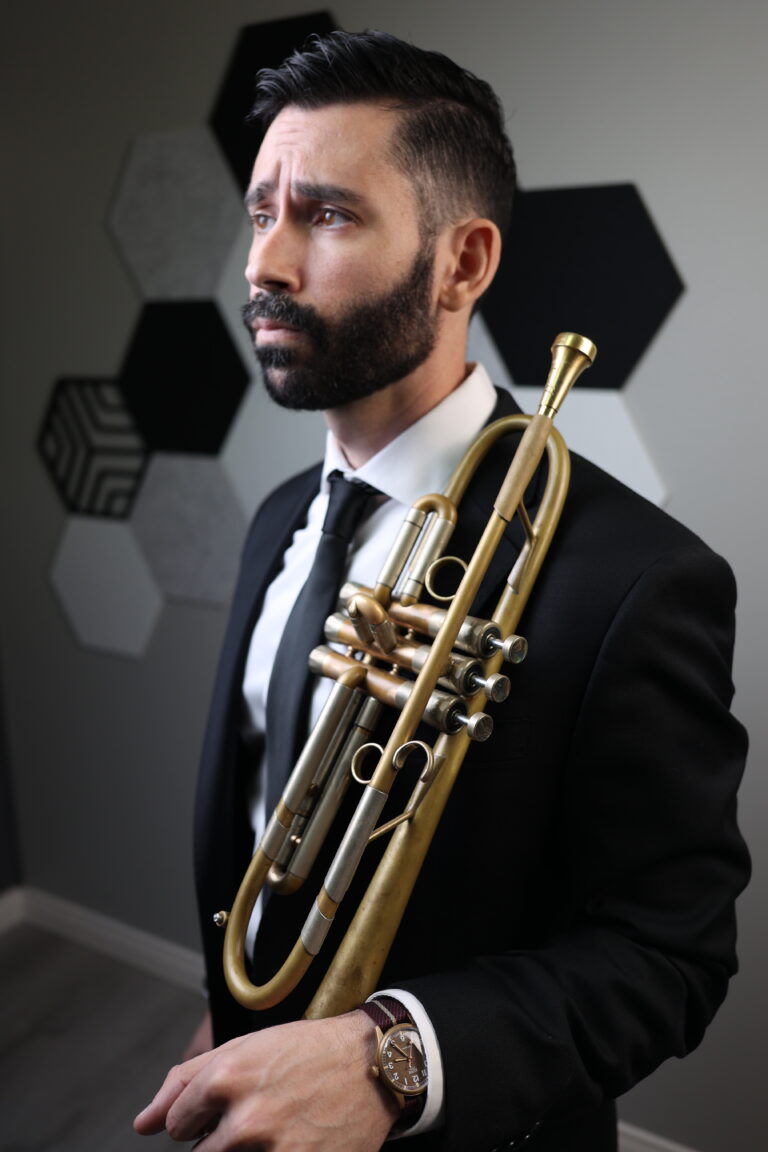
Jesse Garcia
Founder, 1% Trumpet Program
Jesse is a working trumpeter and teacher. He’s performed with the Glenn Miller Orchestra, freelanced on the Las Vegas commercial scene, played extended cruise ship contracts around the world, and served as a trumpeter in the United States Army. He’s worked hands-on with over 100 trumpet players — from beginners to comeback players to seasoned pros — and reaches an audience of 75,000+ across his social platforms. He founded the 1% Trumpet Program to teach what actually works for adult players, drawing on the same systems he uses to keep his own chops sharp on the road.