There’s a common trap that many trumpet players fall into. It usually starts with a good day. You wake up, you practice, and everything clicks. Your high notes feel strong. Your tone sounds great. You’re in the zone. You feel invincible.
So naturally, you want to keep that feeling going. You practice longer. You play higher notes than usual. You push yourself harder. You think, “Hey, I’m on a roll. Let me take advantage of this.”
And then your chops get tired. Or you get sore. Or something goes wrong, and suddenly you’re back where you started, frustrated and discouraged.
This is what I call getting greedy. And it’s one of the most common reasons why trumpet players plateau or regress in their playing.

Here’s the thing: trumpet playing is like building a house. You can’t just build the whole thing in a day. You have to lay the foundation first. Then you build the walls. Then you add the roof. Then you add the interior. It takes time, and it takes patience.
But when you’re having a good day, the temptation is to skip ahead. You think, “I’ve got my foundation solid, why can’t I just jump straight to building the roof?” And the answer is because it doesn’t work that way. The house will collapse if you do that.
Same with trumpet playing. If you’re having a great day and you try to do too much, too fast, you risk setting yourself back. You might feel great in the moment, but tomorrow your chops will be sore, your tone will be off, and you’ll be frustrated.
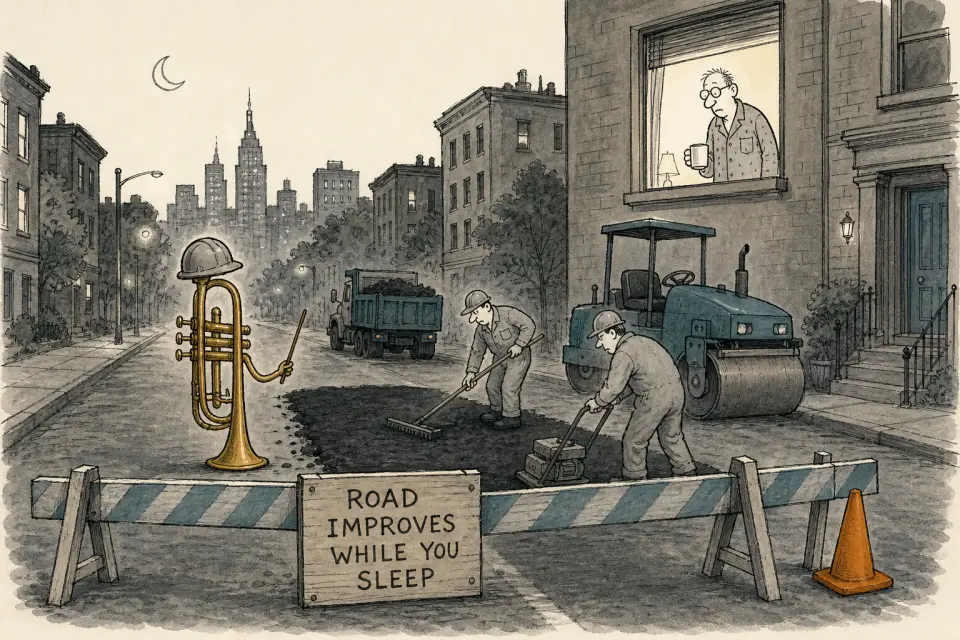
This is why patience is so important. This is why the 1% improvement philosophy works so well. You don’t need to make massive leaps. You need to make small, consistent improvements. And when you’re having a good day, the smart thing to do is to stick to your plan, not exceed it.
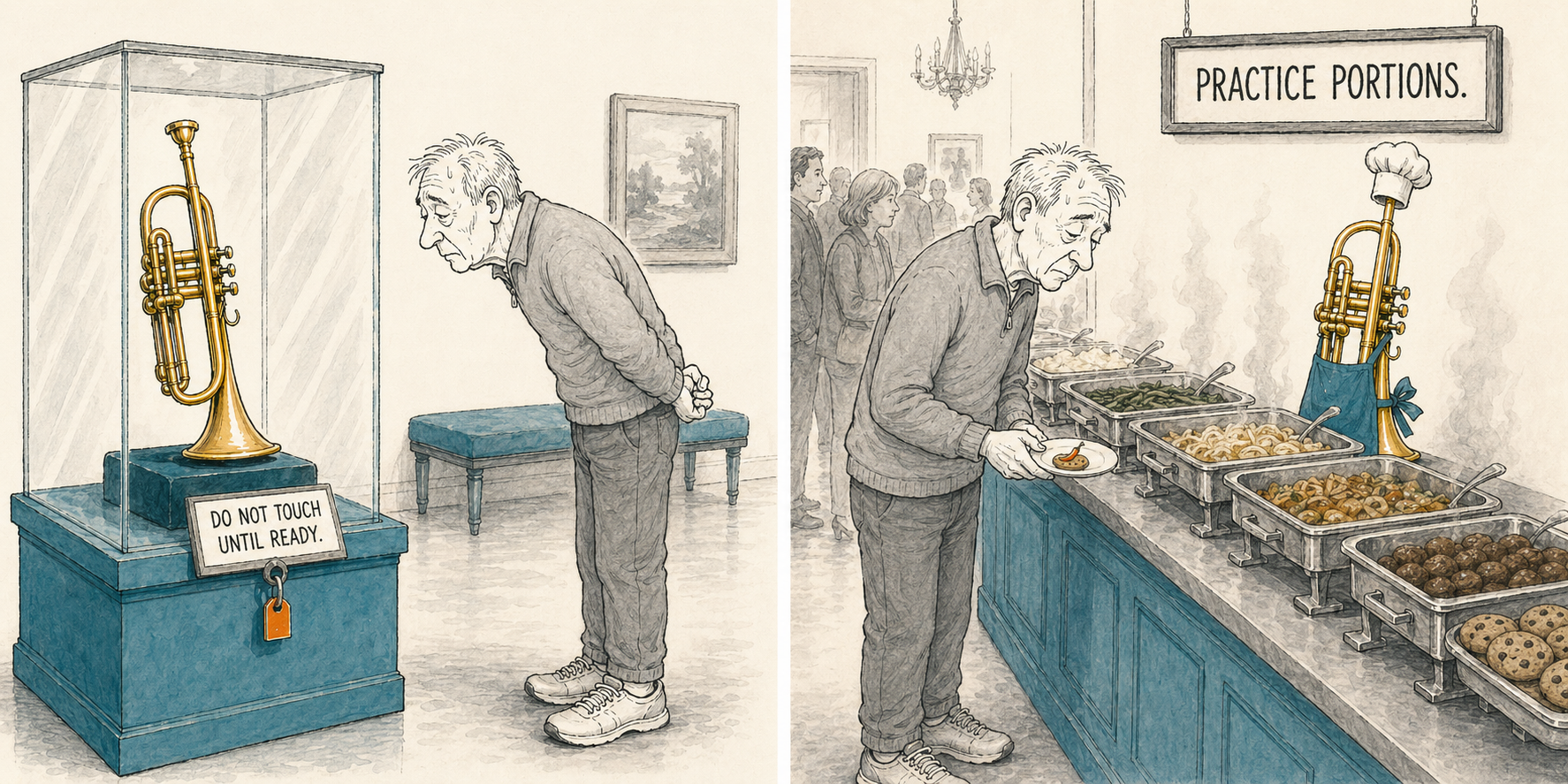
I know this is hard to do. When you’re feeling great, when everything sounds good, it’s natural to want to push. But that’s exactly when you need to show the most discipline. That’s when you need to say, “I’m having a great day, and I’m going to respect that by not overdoing it.”
Here’s what I recommend: have a plan for your practice. Write down what you’re going to do each day. And stick to it. When you’re having a good day, don’t exceed your plan. Do the plan, and then stop. Save the extra energy for another day.
Keep track of your progress. Note how you’re feeling, how your tone sounds, what you accomplished. This will help you see the big picture, and it will remind you that small, consistent improvements add up to big results.
And remember, a good day isn’t the goal. Consistent progress is the goal. One amazing practice session followed by a week of recovery is not progress. Ten good practice sessions, each one 1% better than the last, that’s progress.
So don’t get greedy. Be patient. Trust the process. Do your practice, do it well, and then move on. The results will come.
One last thing: the opposite of getting greedy is also a trap. Some players think, “I’m having a bad day, so I’m just going to skip practice.” Don’t do that. A bad practice is better than no practice. You’re building consistency, and consistency is more important than quality on any given day.
But that’s a different article. For now, let’s just remember: on the days when everything’s going great, don’t get greedy. Stick to your plan. Be disciplined. The small improvements are what matter.
Want this kind of thinking applied to your own playing?
The free 30-minute training reveals the same framework I use with my 1% Trumpet Program students — the one most comeback players never figure out on their own.
Watch the free training →Want the full system in 30 minutes? Watch the free training — the same diagnosis-first framework I use with every player in the 1% Trumpet Program.