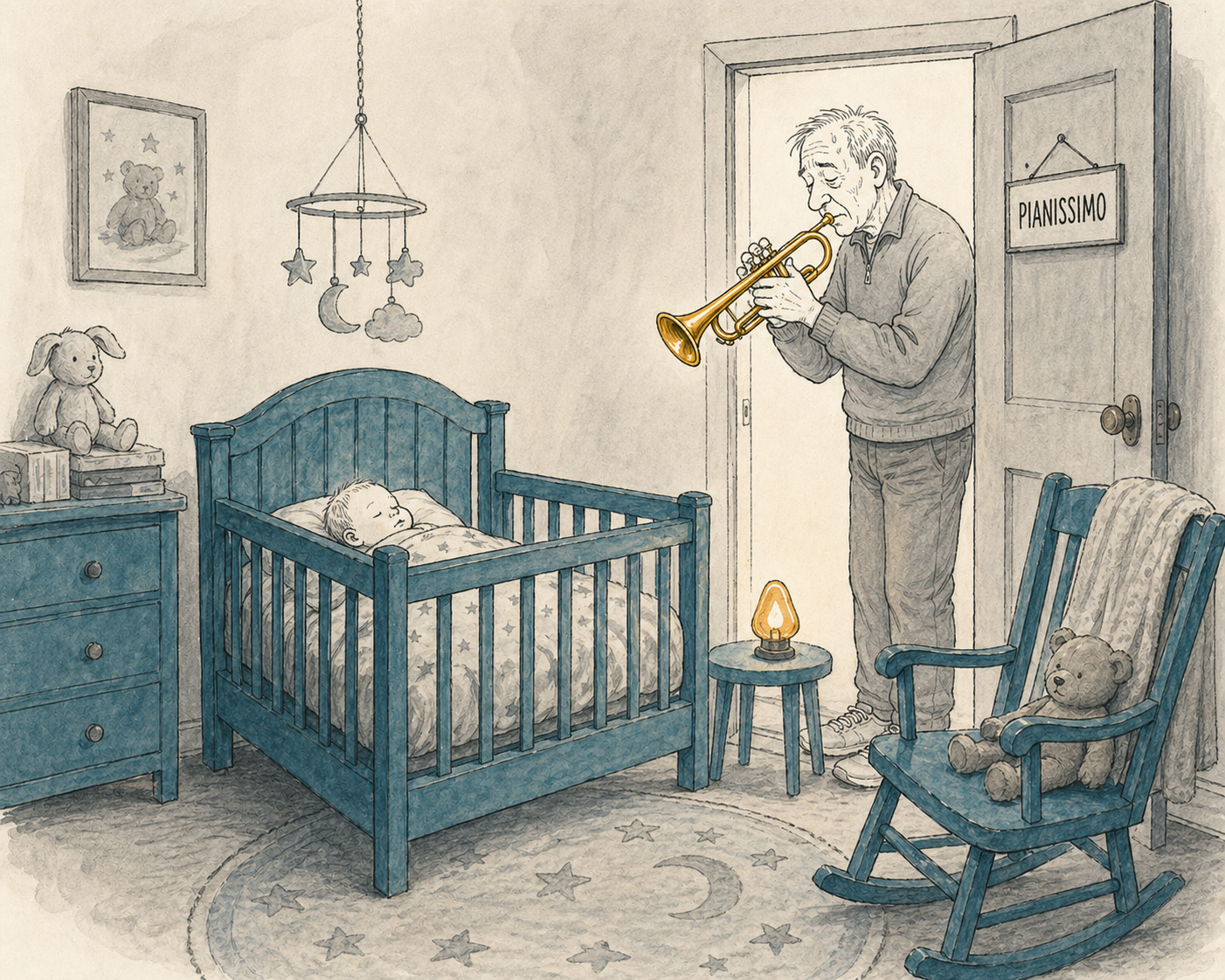
The whisper tone is one of the most underrated exercises in trumpet playing. Most players have heard of it. Some players have tried it. But very few players understand how powerful it is, or how to use it effectively.
So let me give you a comprehensive guide to the whisper tone, what it is, why it’s valuable, and how to practice it correctly.
First, what is a whisper tone? A whisper tone is a very soft sound that you play on the trumpet. It’s not a normal tone. It’s not a full sound. It’s a light, breathy, whisper-like sound. Hence the name.
The key to the whisper tone is that you’re playing with minimal air pressure and minimal embouchure tension. You’re not forcing the sound. You’re letting it happen naturally.
Why is this valuable? For several reasons.
First, the whisper tone teaches you control. When you’re playing a normal tone, you can get away with a lot of inefficiency. You can use too much air. You can use too much embouchure tension. But with a whisper tone, you can’t get away with any of that. You have to be precise. You have to be efficient.
This teaches you what proper trumpet playing feels like. It teaches you what the right amount of air pressure is. It teaches you what the right amount of embouchure engagement is.
Second, the whisper tone is excellent for building consistency. Because you’re not using a lot of force, you have to rely on finesse. You have to rely on the right mechanics, not on brute force. And this develops a consistency that carries over to your normal playing.
Third, the whisper tone helps you develop your listening skills. When you’re playing a whisper tone, you have to listen intently. You can’t just zone out. You have to pay attention to what you’re hearing.
Fourth, the whisper tone is a great way to warm up without stressing your chops. You can play a lot of whisper tones without getting tired, because you’re not using a lot of power.
Fifth, the whisper tone can help you with intonation. When you’re playing very softly, intonation issues become more apparent. So practicing with whisper tones can help you develop better intonation in general.
Now, let’s talk about how to practice whisper tones correctly.
Step one: start with a normal tone. Pick a note, let’s say middle C. Play it at a normal volume with a normal amount of air and a normal embouchure. Get a feel for what that sounds like.
Step two: reduce the volume slightly. Same note, but play it at maybe 50% of the normal volume. You should be using less air and less embouchure engagement. Make sure the pitch stays the same. The note shouldn’t go flat just because you’re playing softer.
Step three: reduce the volume further. Now you’re playing at maybe 25% of normal volume. This is getting close to a whisper tone.
Step four: continue reducing until you reach the whisper tone. This is a very soft, breathy sound. It might sound a little fuzzy. That’s okay. You’re in whisper tone territory.
Now here’s the key: once you’ve reached the whisper tone, maintain the pitch. Don’t let it go flat. Don’t let it get sharp. Keep it stable.
This is harder than it sounds. Your instinct might be to let the pitch go flat as you reduce the volume. But that means you’re not doing the exercise correctly. You need to maintain the pitch even as you reduce the volume. This is the whole point of the exercise.
Once you can play a stable whisper tone on a single note, try doing it on other notes. Try middle C. Try the E above. Try the G above. Try notes in different registers.
One thing you’ll probably notice: whisper tones are easier in some registers than in others. You might find that whisper tones in the middle register are relatively easy, but whisper tones in the high register are much harder.
That’s fine. That’s normal. The high register is generally harder, so it makes sense that whisper tones would be harder there.
But keep working on them. Even if you can only produce a barely-audible whisper tone in the high register, keep practicing. You’ll get better.
Here’s a practice routine for whisper tones:
1. Play a scale in whisper tones. Start on low C. Play up an octave, and then back down. The entire scale should be in whisper tones. The pitch shouldn’t waver.
2. Play arpeggios in whisper tones. C-E-G-E-C, all in whisper tones. Up and down.
3. Pick a musical passage that you’re working on, and play it in whisper tones. Even if it’s complex, try to play it in whisper tones.
All of this should be done very quietly. You should have to strain to hear yourself.
Now, here’s an important point: whisper tones should not be forced. If you’re straining, if you’re using a lot of embouchure tension, you’re not doing it right. Whisper tones should feel relaxed. They should feel easy, even though they require precision.
If you find that you can’t play whisper tones without straining, then you probably don’t have full control of your embouchure yet. And that’s okay. It just means you need to keep working on this.
One thing that can help: make sure you’re breathing properly. Whisper tones require consistent, relaxed breathing. If your breathing is tense, your whisper tones will be tense too.
Here’s something else: you can practice whisper tones without a trumpet. Just on your lips. Create a whisper tone without the mouthpiece and see if you can play a melody. This is excellent for embouchure development.
Now, let me address a common concern: won’t playing whisper tones make my normal tone thinner?
The answer is no. In fact, the opposite is often true. Because whisper tones teach you control and efficiency, they often improve your overall tone quality.
The key is that you’re not practicing whisper tones instead of your normal practice. You’re practicing whisper tones as a supplement to your normal practice. Maybe 10-15% of your practice time.
So here’s how to incorporate whisper tones into your practice:
After your warm-up, spend 5-10 minutes on whisper tones. Do some scales, some arpeggios, maybe a short passage from a piece you’re working on.
Then move on to your normal practice. But you’ll find that your embouchure is more controlled, more precise, more aware.
This carries over to your normal playing. You’ll have better control. You’ll have better intonation. You’ll have a more consistent tone.
The whisper tone is a simple exercise, but it’s incredibly powerful. It teaches you control. It teaches you efficiency. It teaches you to listen.
So if you haven’t been practicing whisper tones, I encourage you to start. Spend some time with them. You might be surprised at how much they help your overall playing.
The whisper tone. It’s not flashy. It’s not exciting. But it’s one of the most valuable tools in your trumpet toolkit.
Give it a try.
Want this kind of thinking applied to your own playing?
The free 30-minute training reveals the same framework I use with my 1% Trumpet Program students — the one most comeback players never figure out on their own.
Watch the free training →Want the full system in 30 minutes? Watch the free training — the same diagnosis-first framework I use with every player in the 1% Trumpet Program.