Topic 07 · 16 Articles
Sound & Musicality
Building a great trumpet sound through imagination, listening, and aestheticism. The inner game of tone and musicality, in 16 articles.

How to Build a Great Trumpet Sound
You can only play what you can hear. The complete guide to building a trumpet sound with identity — the science, the philosophy, and the daily practice that turns a generic sound into one that is unmistakably yours.
Read the full guide →The Inner Game
Sound Starts in the Imagination
Sound starts in the mind. These articles build the mental model — taste, reference, focus, audiation — that everything else runs on.
The Inner Game
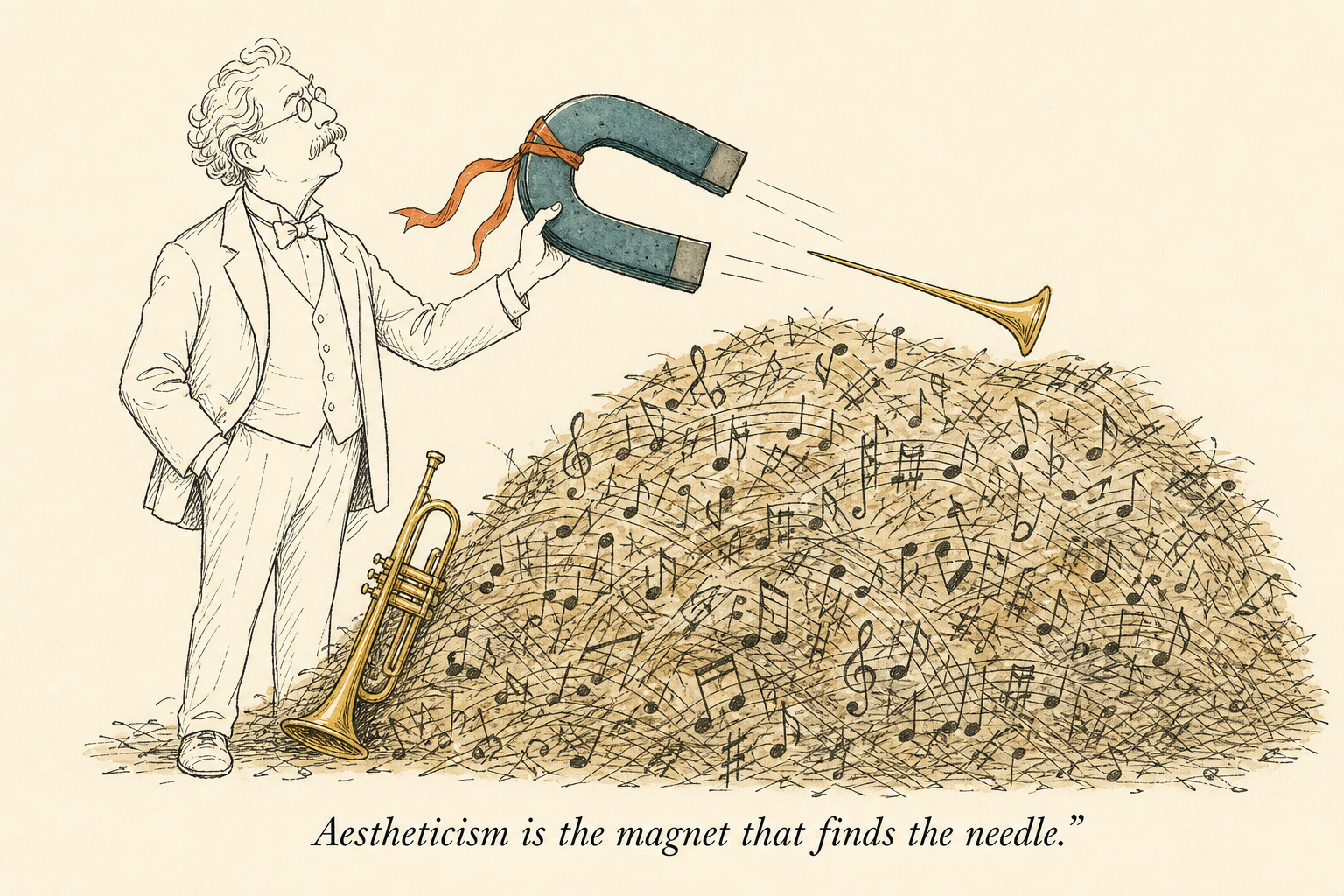
Aestheticism as a Magnet
Taste is a trainable skill, not a gift. Build the magnet that finds great sound in a haystack of generic playing.
Read the full article →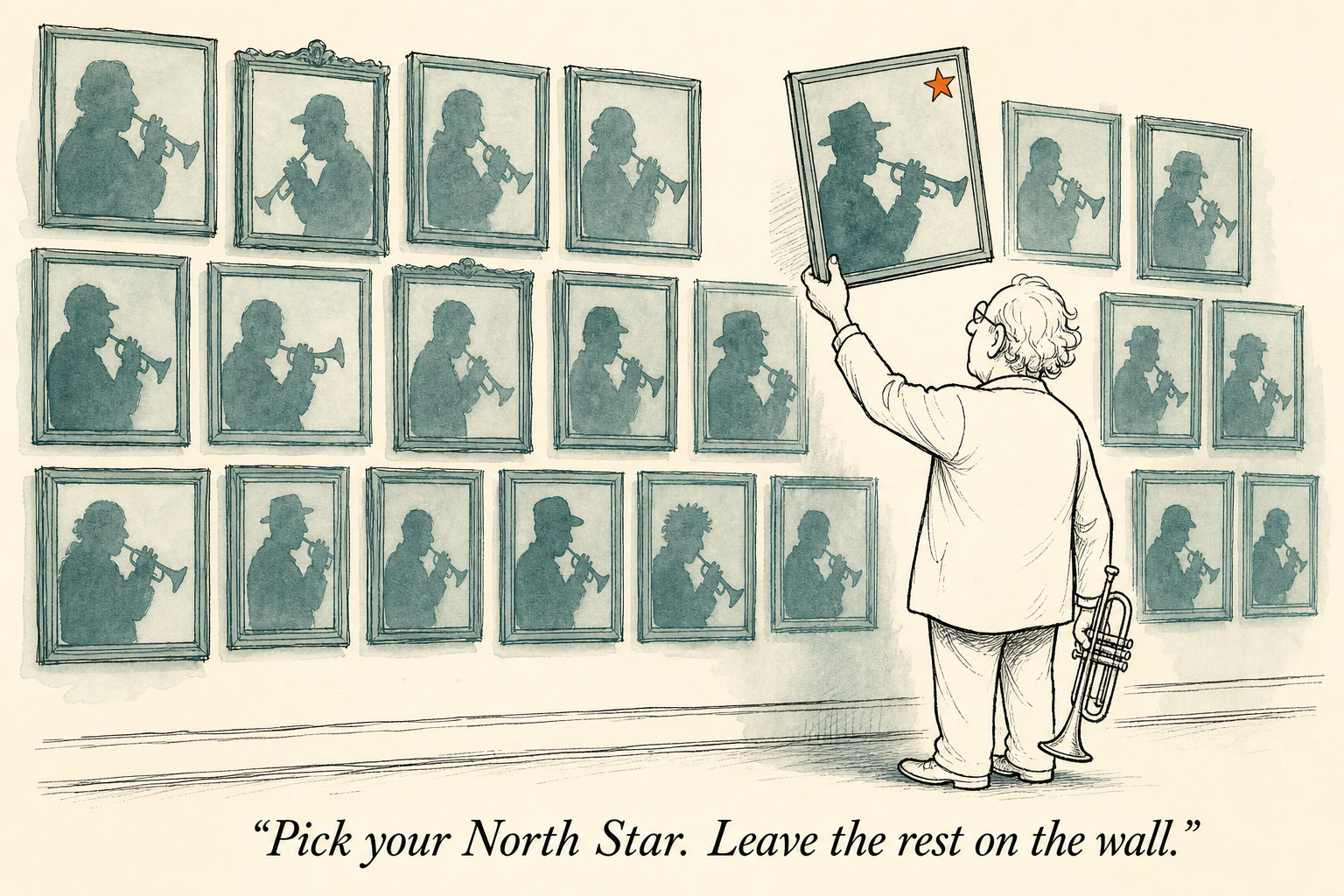
The Inner Game
Pick One Trumpet Player and Mean It
The four canonical North Stars (Marsalis, Miles, Payton, James) and how to choose the one that is yours.
Read the full article →
The Inner Game
The 5-Player Mistake
Trying to sound like five players at once is signal interference. Why hearing everyone means sounding like nobody.
Read the full article →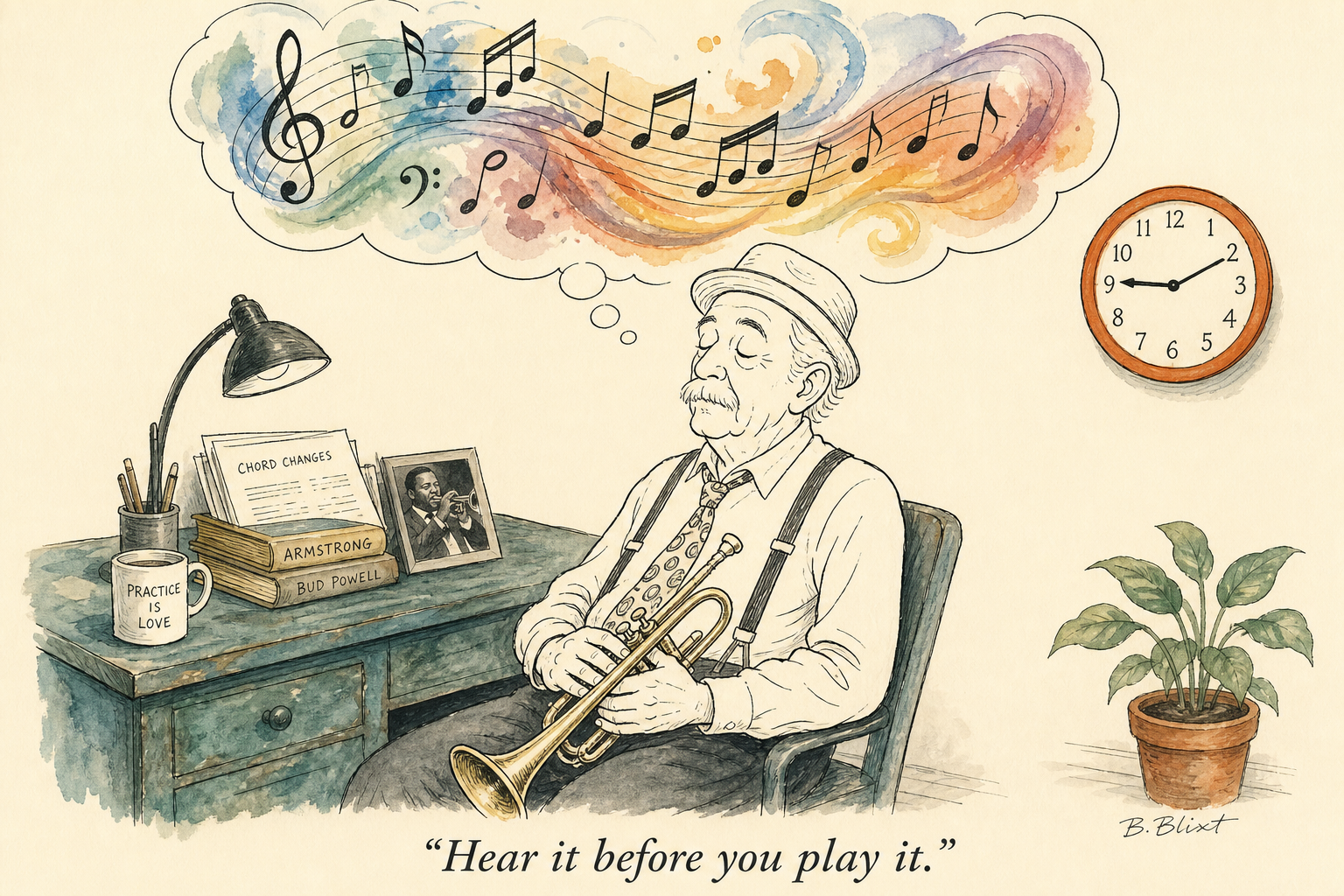
The Inner Game
Audiation: Hearing Before You Play
Hear the note before you play it. The inner-ear rep that primes every real rep, the way great athletes rehearse.
Read the full article →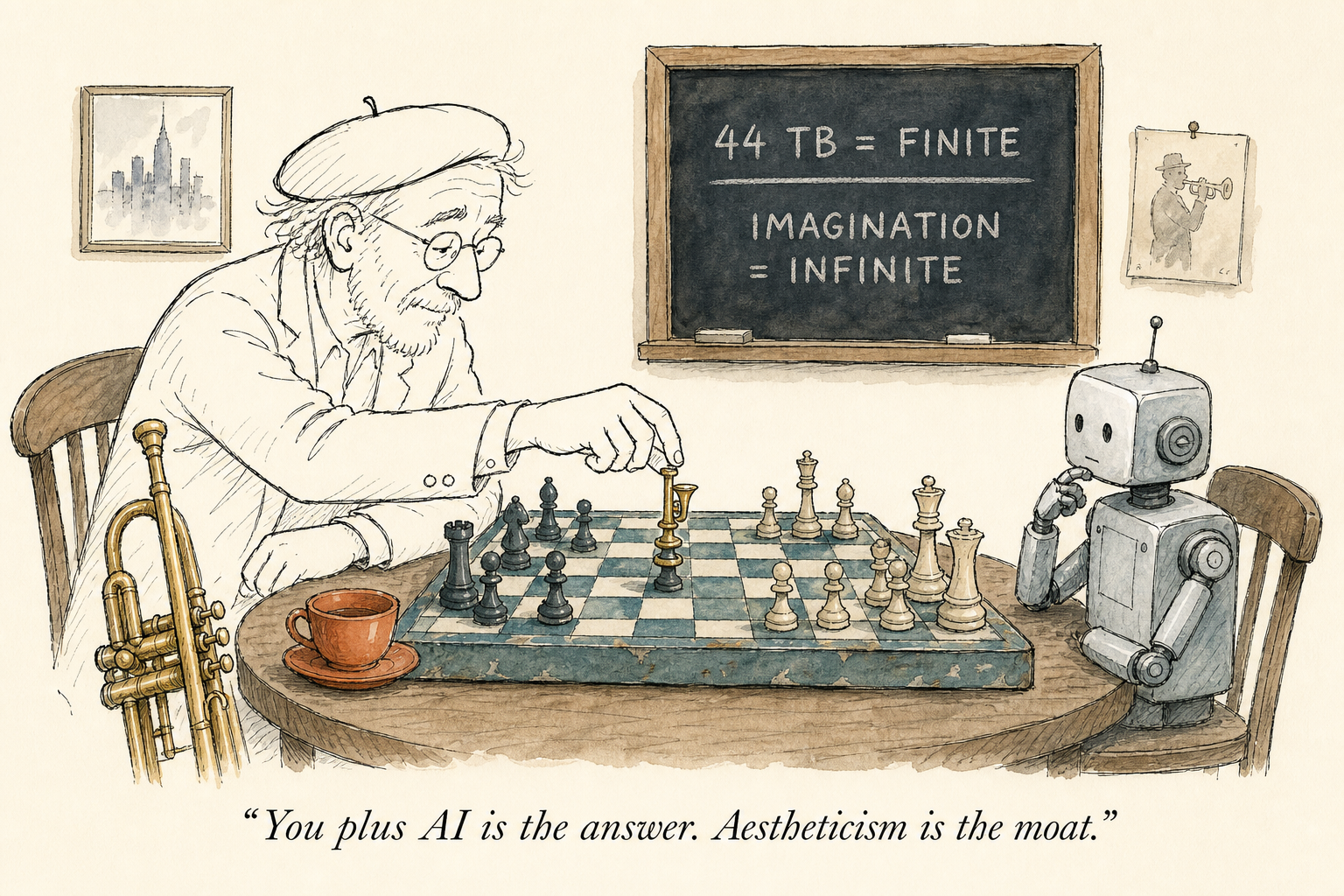
The Inner Game
Why Aestheticism Is Your Moat
AI is not coming for players who develop real taste. The chess lesson most musicians missed, and why aestheticism wins.
Read the full article →How Sound Works
The Mechanics Under the Hood
What a trumpet sound is actually made of, and how every piece of it is independently adjustable on every note.
How Sound Works
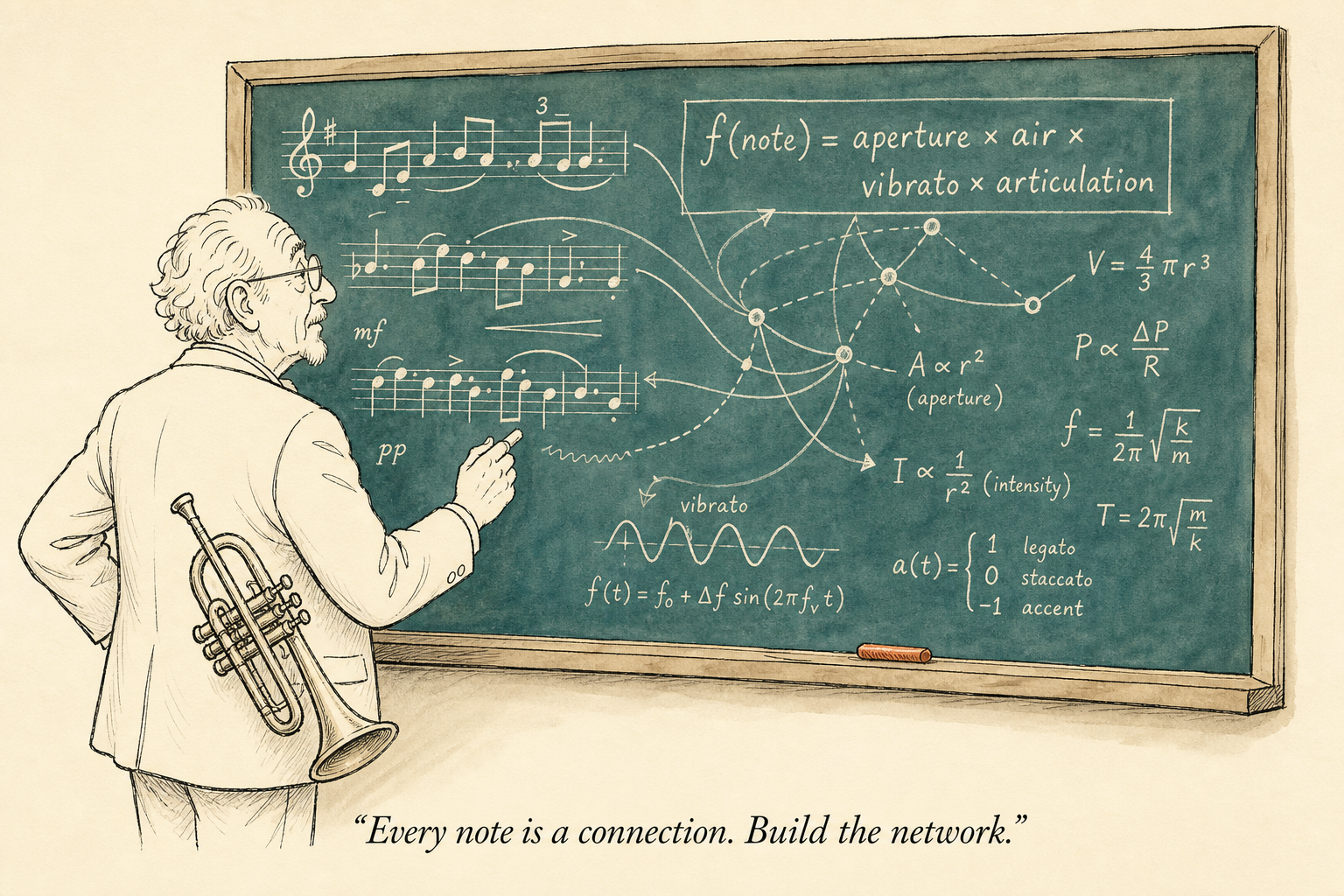
The Algorithm of Trumpet Playing
Your sound is a circuit with separate wiring for every note. What rewiring actually means, and why it is learnable.
Read the full article →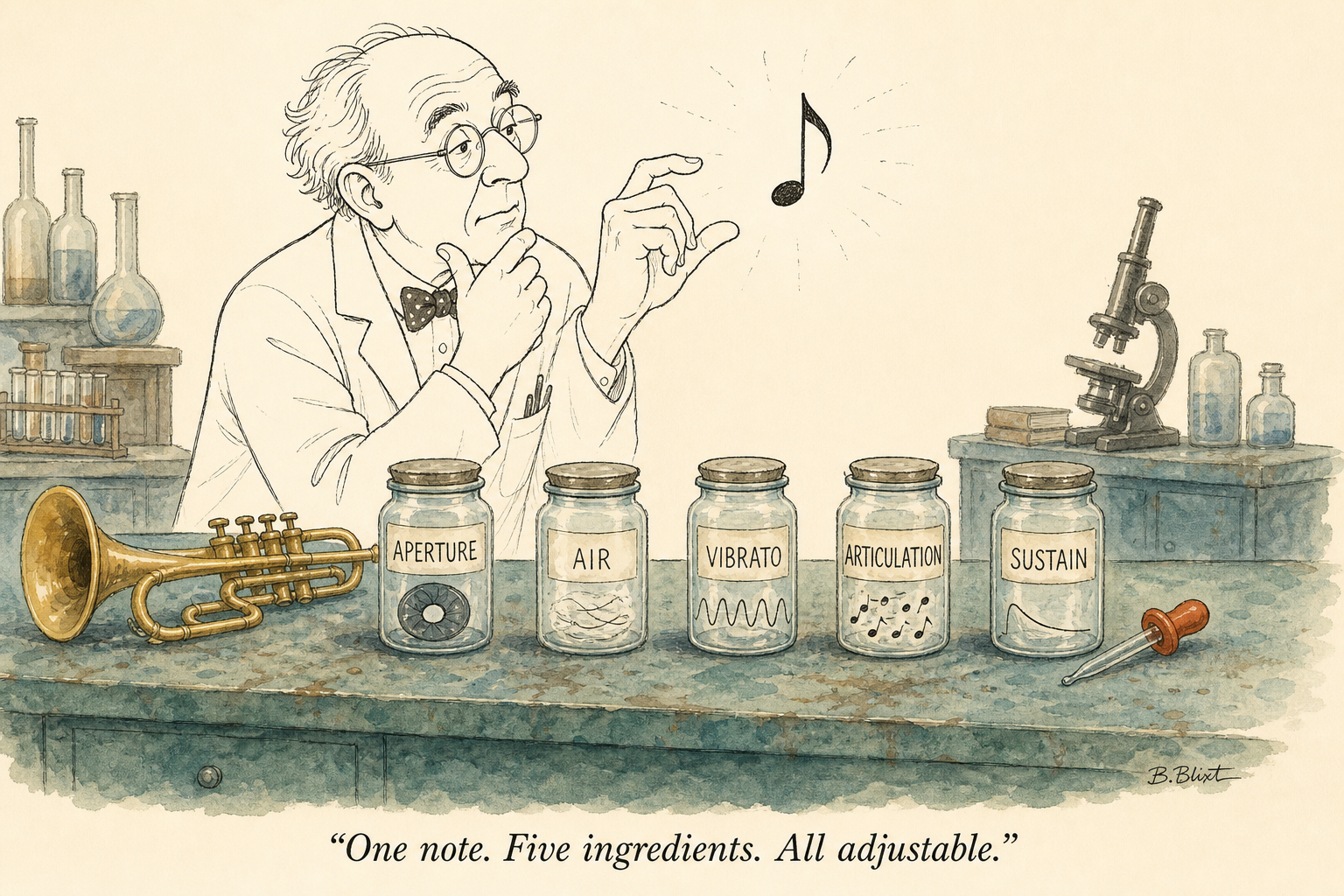
How Sound Works
The Five Components of Sound
A trumpet sound is five ingredients per note: aperture, air, vibrato, articulation, sustain. Name them, adjust them.
Read the full article →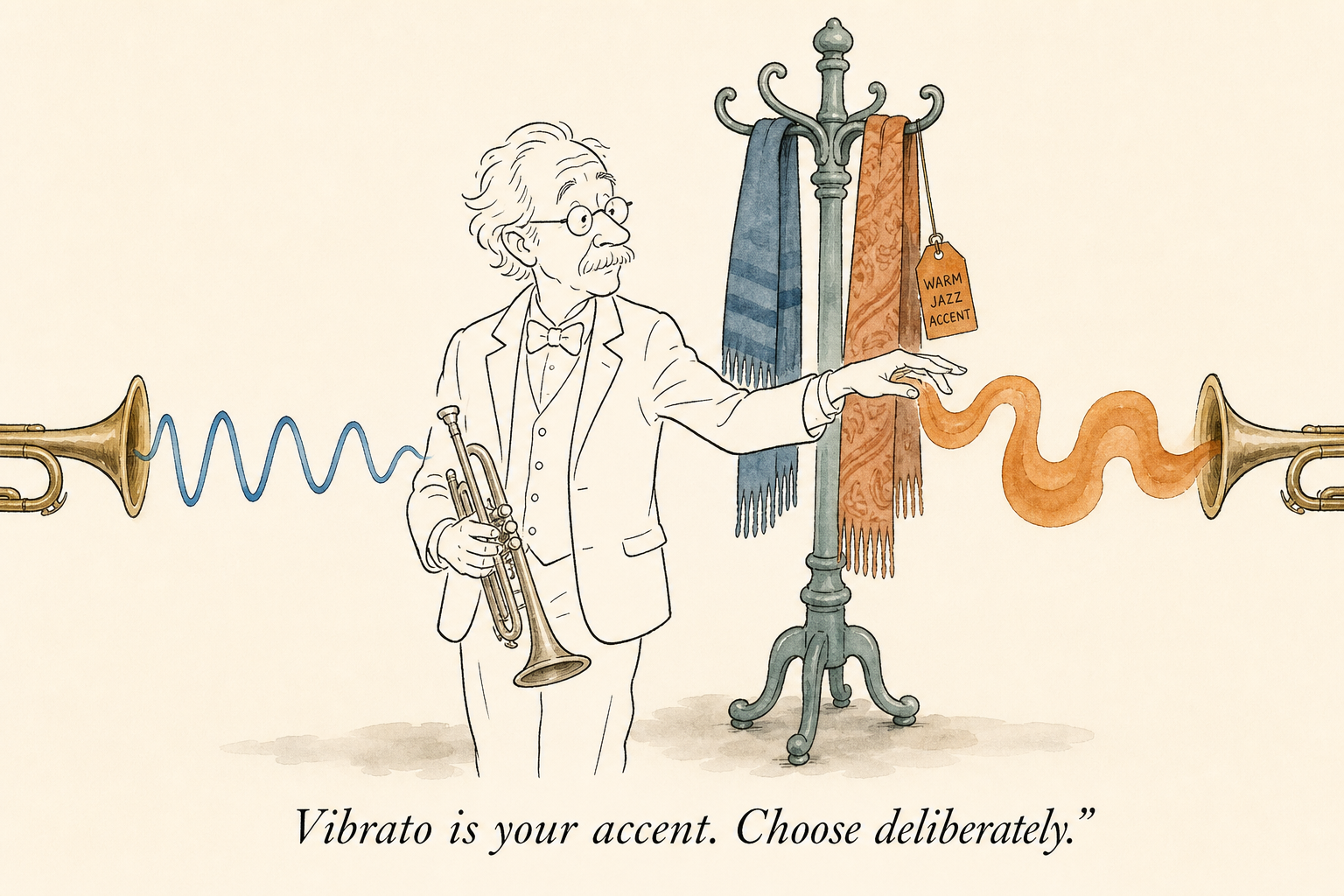
How Sound Works
Vibrato as Identity
Vibrato is to your sound what accent is to your voice. Most players have one and do not know it. Make it a choice.
Read the full article →The Practice
Turning the Model Into Reps
The training itself. How to evaluate, listen, and drill your way from a generic sound to one with identity.
The Practice
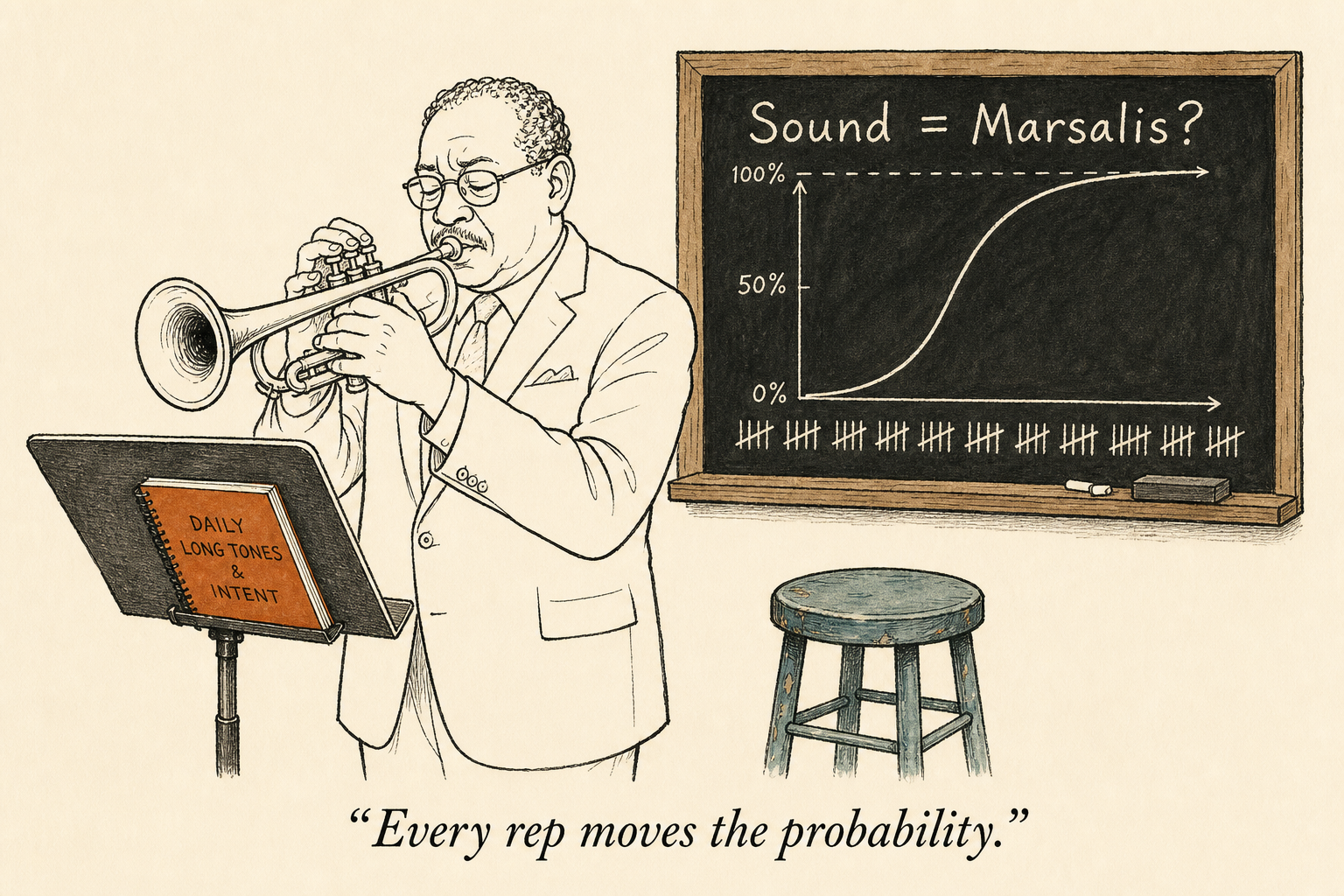
The Probability Game
Build your sound by asking one binary question every rep: does this match my reference, yes or no?
Read the full article →
The Practice
Listening Deeply
Most listening is passive. The questions that turn vague impressions into objective, repeatable sound evaluation.
Read the full article →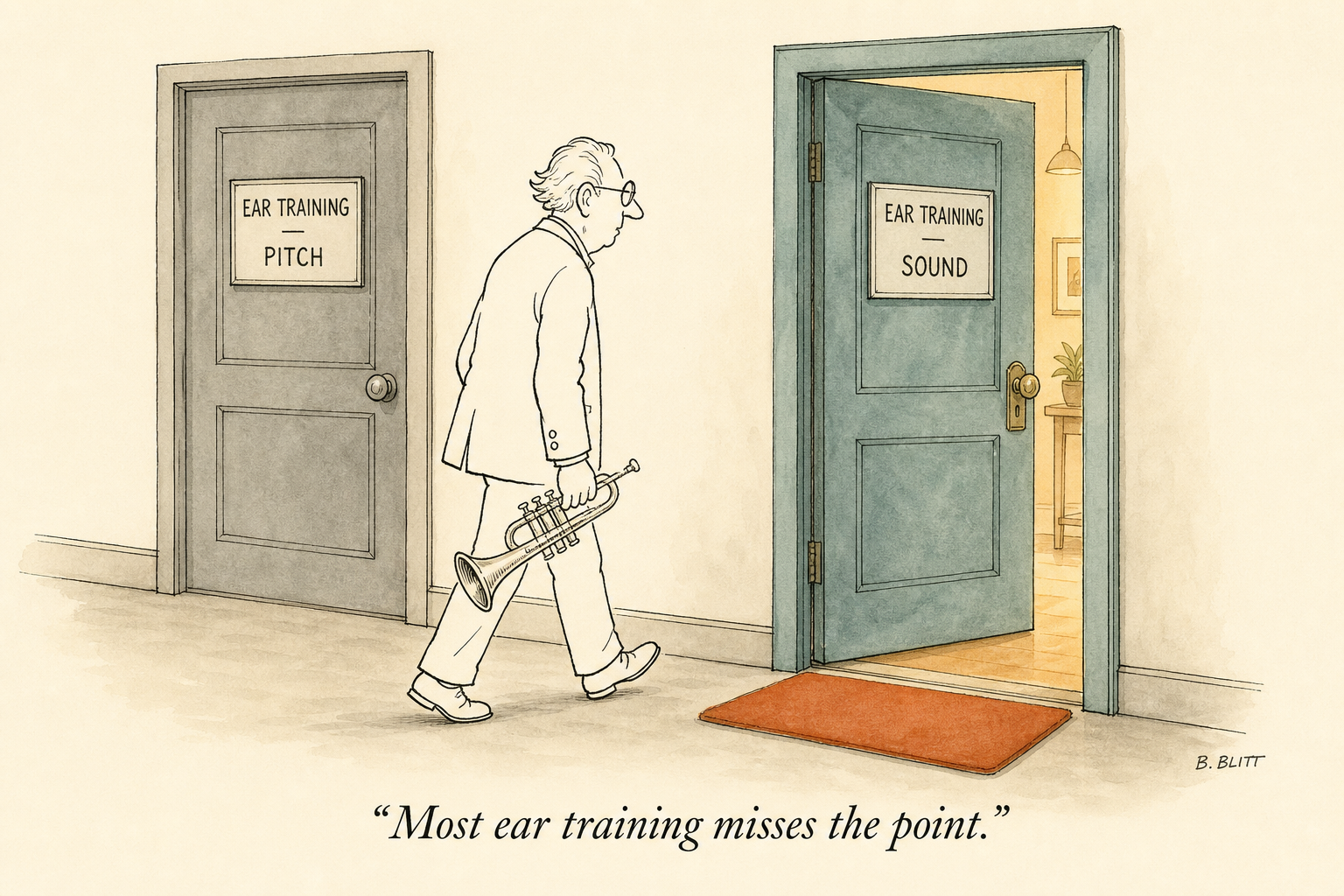
The Practice
Ear Training for Sound
Pitch ear and sound ear are two different languages. The drills for the one trumpet players almost always skip.
Read the full article →
The Practice
Long Tones as Sound Development
Long tones are not endurance work. They are the slowest reps where your real sound actually gets built.
Read the full article →Sound Fundamentals
Soft Playing and the Long Game
Foundational soft-playing and long-tone work that underpins every sound goal in this topic.
Sound Fundamentals
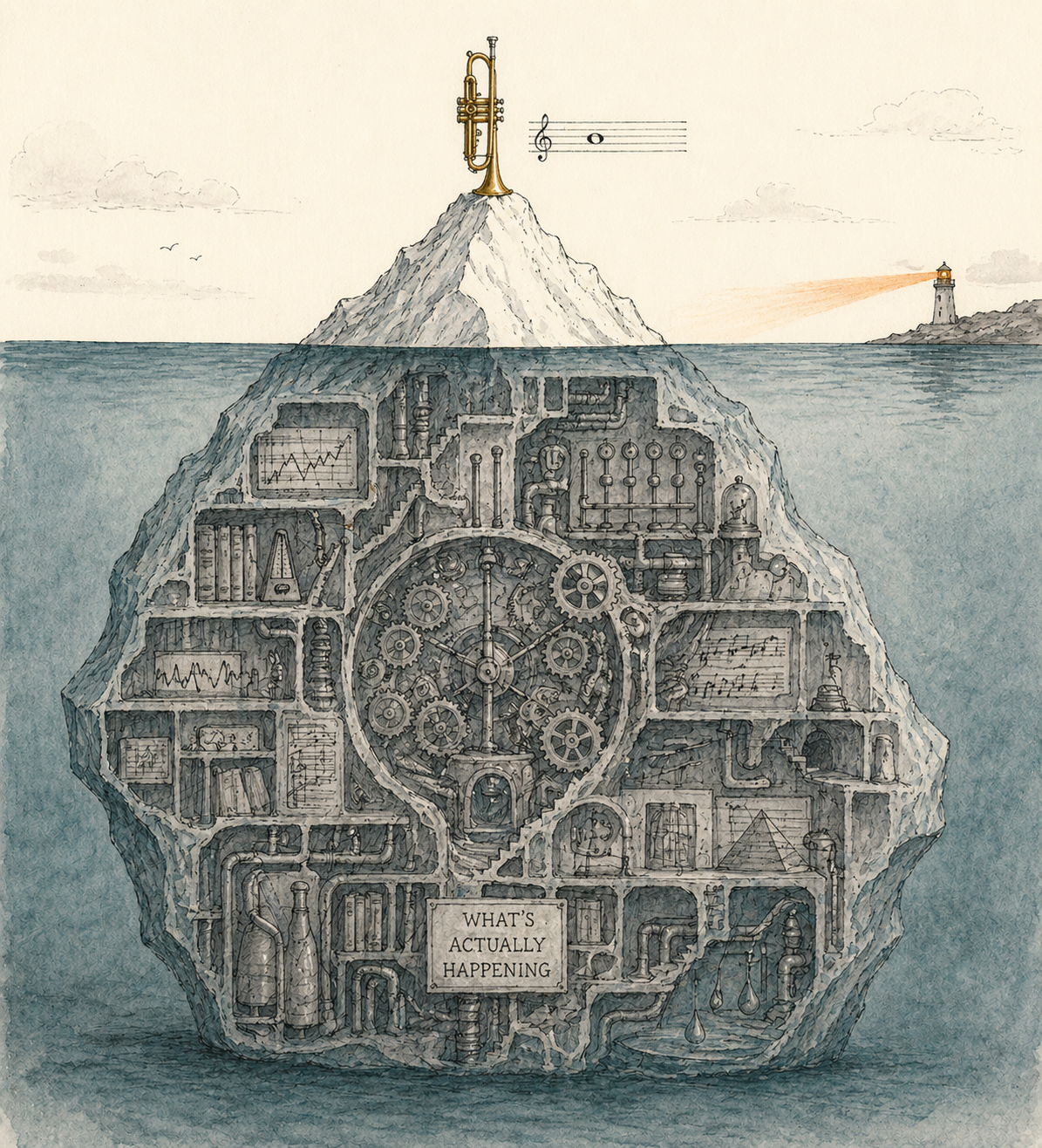
The Deceptive Complexity of Long Tones
Long tones look simple and are not. What is really happening inside the most underrated exercise on the horn.
Read the full article →
Sound Fundamentals
The Whisper Tone Guide
Practicing below your threshold. How the quietest playing you can do sharpens control over everything louder.
Read the full article →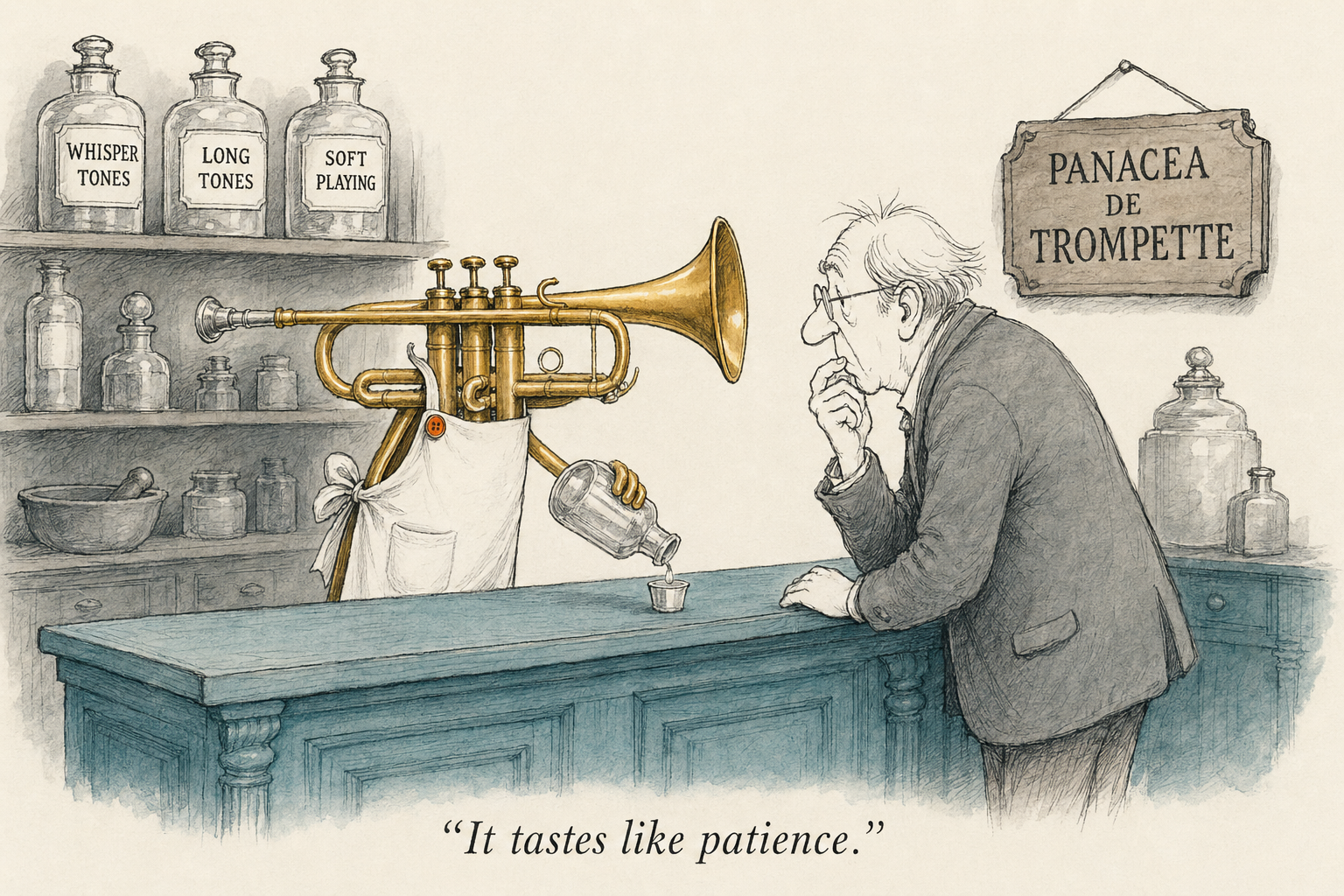
Sound Fundamentals
Panacea de Trompette: The Soft-Playing Cure
Why dialing the volume down fixes more problems on the horn than playing louder ever will.
Read the full article →